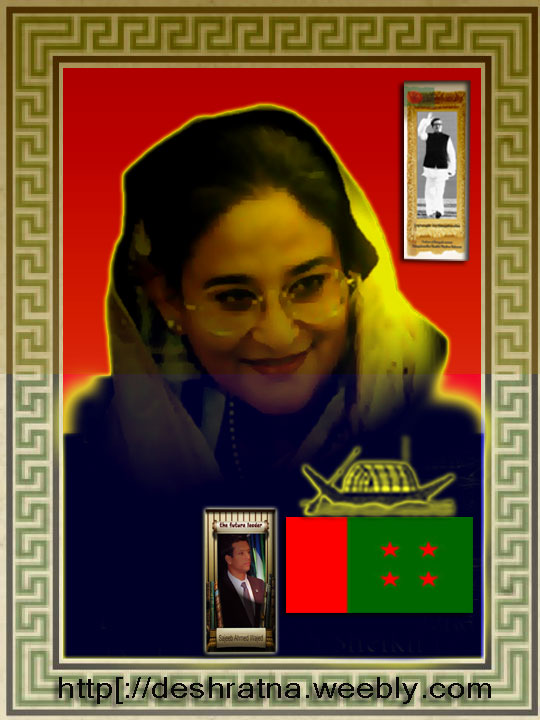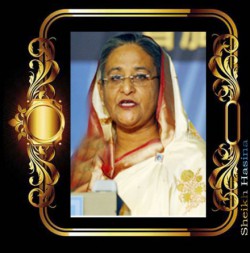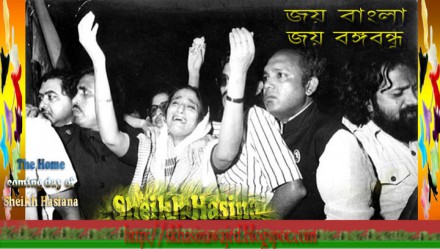
Political Profile of Sheikh Hasina
"We want to build a society free from terrorism, corruption and poverty. We want to fully equip the nation with the ability to enter the 21st century along with other developed countries of the world", Sheikh Hasina announced in her election manifesto on 10 May 1996. Then came the June 12 parliamentary elections. The Bangladesh Awami League, under the dynamic leadership of Sheikh Hasina, won a majority of seats in Parliament and formed the government on June 23.
June 23, 1996 is not merely the day on which Sheikh Hasina, daughter of the founding father of Bangladesh, Bangabandhu Sheikh Muiibur Rahman, was sworn in as the 10th Prime Minister of the People's Republic of Bangladesh. On this day, the people of Bangladesh once again perceived the outcome of their right to freely elect their representatives. After 21 years of ruthless oppression, free-wheeling corruption and overt and covert martial law, democracy has finally been restored.
On the day of the cruel assassination of Bangabandhu Sheikh Mujibur Rahman on August 15, 1975, along with members of his family, Sheikh Hasina and her sister Sheikh Rehana escaped the gruesome act as they were away from the country. After the tragedy Sheikh Hasina was forced to remain outside the country. but she continued to work for unifying the Bangalees at home and abroad for launching an all-pervasive democratic movement. On May 17, 1981 after nearly six years in exile, Sheikh Hasina returned to Bangladesh as the President of Bangladesh Awami League. She was then only 33 years old. Ever since that day, she has constantly been fighting to establish the rights of the people of Bangladesh. She had to struggle for 15 long years to prepare and lead the Awami League for the task of carrying out a ceaseless political movement for the restoration of democracy in the country. Throughout this difficult struggle, the poor masses of Bangladesh stood firmly beside her.
The dream that had once seemed impossible became a reality on March 30. A popular upsurge forced the autocratic regime to surrender to the people's demand for holding national elections under a neutral caretaker government. The pioneer of the movement was Sheikh Hasina, a relentless fighter, carrying forward the legacy of her illustrious father Bangabandhu Sheikh Muiibur Rahman. Sheikh Hasina dedicated 15 years of her life fighting for restoration of the democratic rights of the people of Bangladesh. Her indomitable spirit, political farsightedness and complete devotion to the cause of the people finally helped efface the legacy of military coups, political murder and oppressive regimes.
Throughout her college and university years Sheikh Hasina actively participated in political movements. The death of her father on August 15, 1975 was the turning point in her career. The brutal assassination of Bangabandhu Sheikh Mujibur Rahman and many of his family members placed the hope for the country's future in his two exiled daughters— Sheikh Hasina and Sheikh Rehana.
The impact of the coup on Bangladesh was quick and powerful. It placed the country completely at the mercy of some ambitious and greedy generals and changed the course of the history of Bangladesh. What happened was not just a change of government. The coup leaders attempted to transform a democratic nation into a military oligarchy. The pro-Pakistan forces, which had suffered an ignominious defeat in the War of Liberation in 1971, regained control of the government and introduced policies to undermine the democratic and secular ideals and values which the Bangalees had firmly cherished and upheld, and which had inspired the creation of Bangladesh. The first move was the imposition of Martial Law to deprive the people of their democratic rights. This was followed by concerted efforts at breaking the spirit of the to struggle. Murders, unlawful imprisonment and tortures sponsored by the then government followed.
Bangabandhu's entire life was dedicated to the emancipation of the people of Bangladesh. All the dreams he had cherished throughout the turmoil of his life blossomed around the somnolent. The volcanic potential of the life of the people of this land manifested in his struggle. He could not have enough time to take care of his family. Bangabandhu's wife Sheikh Fazilatunnesa took care of their children and family, and at times even of party matters in his absence. Her father's ideals, family traditions and a strong personality, coupled with her mother's guidance, helped Sheikh Hasina get transformed into the great leader that she is today.
She had been keen in politics since the beginning of her life. In her own words, "I have been associated with the political ups and downs of the country and with the Awami League since my childhood. I witnessed the unbearable oppression suffered by my father and his colleagues during the democratic movements. My father spent most of his life in prison. Whenever he was free, he used to remain busy with political activities and in organizing the party. I have seen my mother guide the party along with other leaders in the absence of my father, and carry out his plans while he was in prison. My first lesson in politics came out of my family atmosphere. The first time I directly got involved in politics was when the country was in political turmoil demanding autonomy and democracy. Later, I fully participated in the students' movement in 1962. Political unrest was widespread among students in 1962. Students, workers, farmers and ordinary people came out on the streets with their political and economic demands. I attended meetings and took part in processions against the undemocratic and anti-people Pakistani rulers. No conscious Bangalee could remain aloof from the political mainstream during those tumultuous days in the sixties. I too could not keep myself away from the path of revolution and resistance".
Soon after the assassination of Bangabandhu Sheikh Mujibur Rahman and other members of his family, Sheikh Hasina began to communicate with party workers while living outside Bangladesh. Despite being forced to remain in exile, on August 15, 1980 she attended a huge political rally in London, on the occasion of the observance of the fifth anniversary of the death of the Father of the Nation Bangabandhu Sheikh Mujibur Rahman.
Soon after the assassination of Bangabandhu Sheikh Mujibur Rahman and other members of his family, Sheikh Hasina began to communicate with party workers while living outside Bangladesh. Despite being forced to remain in exile, on August 15, 1980, she attended a huge political rally in London, on the occasion of the observance of the fifth anniversary of the death of the Father of the Nation Bangabandhu Sheikh Mujibur Rahman.
Sheikh Hasina's first speech in York Hall established her as a political leader. Then in 1981, still in exile, Sheikh Hasina was made the president, in absentia, of the largest political party of Bangladesh, the Bangladesh Awami League. Within a very short period of time she proved to be as charismatic a leader as her father had been. Keeping in mind her father's hopes and dreams for the country, she began to speak out against the oppressive military rulers in an attempt to establish the democratic rights of the people.
It was Sheikh Hasina's unbounded courage and inner strength of personality that sustained her during the traumatic period that followed her return to Bangladesh in 1981. It was not an easy task for a young woman who had been stranded for years with her husband and small children in a foreign country. A hostile government persecuted all those who were loyal to her father and the Awami League. Nevertheless, Sheikh Hasina's courage did not fail her, nor did she lose faith in the future of Bangladesh. Her profound commitment to Bangalee nationalism, secular values and democratic ideals fortified her morale, during those lonely years of her life. In the manner of her illustrious father Sheikh Hasina's deep love for the people of Bangladesh was combined with the conviction that the voice of the people would ultimately be heard. After the initial period of shock and mourning, she began to mobilise and organise Bangalees at home and abroad, especially inspiring those who had lost all hope in the future of Bangladesh. The people responded and welcomed the daughter of democracy with open arms and renewed hope.
In 1981, the Bangladesh Awami League, reeling under the assault of the military regime of General Ziaur Rahman, invited Sheikh Hasina to assume the leadership of the party that had led the country through its war of independence in 1971. She accepted the challenge and returned to a hearty welcome by millions of followers of Bangabandhu. Since that memorable day, as the President of the Awami League, she led the party through a period of reorganisation and rehabilitation. Sheikh Hasina suffered imprisonment several times, fought two national elections and led a massive popular movement through which she ousted an autocratic military dictator from power.
Under the leadership of Sheikh Hasina, the Awami League spearheaded a struggle against the despotic rulers. She initiated and led an uncompromising movement against the military dictators in an attempt to bring democracy back to Bangladesh.
In 1982, she was the first to raise the voice of protest against assumption of state power through military coups d'etat. Taking great risk, she put tremendous pressure on Ershad's regime to end martial law and hold free and fair elections. Though political activities were banned at that time the Awami League was the only political party that had the courage to demand democratic rights for the people of Bangladesh. In 1983, Sheikh Hasina formed a 15 party alliance from which grew a powerful student movement protesting against the military government. On February 14, 1983 the army entered the Dhaka University campus and fired bullets and used batons to quell the agitating students. On February 15, as she protested the inhuman act through organising a peaceful rally at the Shahid Minar (the memorial for the martyrs of the Language Movement of 1952), Sheikh Hasina was arrested and taken blindfolded to Dhaka cantonment along with her associates. She was kept incommunicado for 15 days. In October 1983, Sheikh Hasina said, "The tactics previously applied to usurp the office of the President since the murder of Bangabandhu Sheikh Mujibur Rahman have been adopted once again by General Ershad. The process is, first, staging a coup d'etat, then consolidating power and finally declaring the usurper as President. If the usurper goes to the electorate after he captures power, the result of the election is determined beforehand in his favour. As a result, political instability persists. That is why we demand that state power be handed over to the elected representatives of the people".
Thereafter, she had to suffer confinement time and again. In 1984 she was put under house arrest in February and then again in November. In March 1985, she was put under house arrest for three months at a stretch. On March 26, 1986 in a statement issued in Dhaka on the occasion of the 15th anniversary of the independence of Bangladesh, Sheikh Hasina said that her party would participate in the general elections as part of its movement to put an end to the politics of "coups, killings, conspiracies and martial law". She also said, "We want to have elections not only to form the next government but also to establish a system that represents the people as well".
Sheikh Hasina became Leader of the Opposition in Parliament commanding the support of 104 elected MPs belonging to her party and alliance. As the youngest Leader of the Opposition she demonstrated her political acumen and sagacity in and outside Parliament. She forced the treasury bench to withdraw a number of bills which went against the fundamental rights of the people. Sheikh Hasina remained Leader of the Opposition until the dissolution of Parliament by General Ershad in December 1987.
In October 1986, Sheikh Hasina, in defiance of marital law, addressed a huge rally in Bogra. On her way from Bogra to Rajshahi, she was detained and forcibly sent back to Dhaka. On November 11, 1987 she was again put under house arrest for a month, despite her being the leader of the opposition in Parliament at the time. During a demonstration in front of the government secretariat on November I0, 1987 the police opened fire on Sheikh Hasina and tried to lift her car with a crane while she was leaving the National Press Club. In the face of strong resistance from the people, the police failed to arrest her and she was able to slip out of the car. On January 24, 1988, while addressing a public meeting in Chittagong, police fired on the crowd, killing nearly 80 people and narrowly missing Sheikh Hasina and her aides. Undeterred by these threats on her life, she went on touring the country from one end to the other to inspire and motivate the people to defend their democratic rights.
Sheikh Hasina took a resolute stand against military rule from the day she returned to Bangladesh. Since then, she never compromised on her commitment to the people. Her 15 year long struggle against military rule was crowned with success when the last military dictator had to surrender power in ignominy.
Today, Sheikh Hasina stands transformed from the political fugitive as she was in 1975, to be in the center of the political life of the nation, pioneering the struggle to re-establish the ideals for which millions of Bangalees fought and died. Sheikh Hasina steered the historic mass movement which toppled the autocratic regime of General Ershad and forced him to transfer power through constitutional means. At a huge public meeting in Dhaka on November 6, 1990 Sheikh Hasina announced the constitutional formula for the peaceful transfer of power in accordance with Articles 51 and 56 of the Constitution. This was eventually accepted by the entire nation. On November 27, 1990 Sheikh Hasina was again confined in Bangabandhu Bhaban following the proclamation of a state of emergency. But the government was forced to release her the same day, in the face of a mass protest against her arrest. On December 4, 1990 General Ershad was compelled to step down and accept the demand of the people following a 24 hour ultimatum Issued by Sheikh Hasina.
It was a matter of great disappointment, however, that her party did not get an absolute majority in Parliament in the 1991 national elections. the Awami League received 38% of the popular vote and the Bangladesh Nationalist Party received 31%.
Sheikh Hasina's accomplishments as Leader of the Opposition in Parliament drew the admiration of the entire nation. As in the past, she stood firmly on the side of the people on every issue in which the interests of the people were involved. She observed how the Presidential System had been abused by previous leaders. Sheikh Hasina steered all the political parties towards a parliamentary system which eventually had to be accepted by the BNP government. Indeed, it was due to her initiative and leadership that today the nation has been able to attain its goal of establishing a parliamentary form of government.
Sheikh Hasina has always stood by the poor masses of Bangladesh. In 1992, she launched a nationwide campaign to help the farmers and workers who had been suffering from negligence and indifference under the BNP government. In 1995, peasants raised their protest against an artificial fertilizer crisis created by the BNP leaders and their henchmen, which resulted in the death of 18 peasants in police firing. Sheikh Hasina reacted sharply in support of the poor peasants and mobilised a strong peasant movement across the country to protect their interest. Soon after, the BNP government killed 17 workers who had been agitating against the closure of several hundred mills and factories. Sheikh Hasina rushed to the aid of the workers to share their concerns and helped them to unite in the defense of their rights.
In August 1995, a teen-aged girl Yasmin was raped and brutally killed by a gang of policemen in Dinajpur. Seeing no justice being done a group of people surrounded the police station and demanded justice. The police opened fire and killed seven of the protesters. Sheikh Hasina strongly protested against this cruelty and, using the example of the Dinajpur incident aroused public awareness about similar crimes committed by the BNP government. This led to an enormous public reaction against the BNP all over Bangladesh.
As Leader of the Opposition in Parliament, Sheikh Hasina always upheld the interest of the people and the cause of democracy. Witnessing what happened during the previous by-elections Sheikh Hasina began to demand the creation of a permanent system which would ensure free and fair elections in the country. She demanded the resignation of the BNP government and proposed the establishment of a non-party, neutral, caretaker government to conduct national election.
In 1994, Sheikh Hasina succeeded in organising a campaign that brought together other major opposition parties closer to hers in the movement for democracy. When all negotiations with the government failed, the opposition members in Parliament resigned on December 28, 1994. Sheikh Hasina launched a renewed movement demanding that general elections be held under a neutral caretaker government. The movement gained momentum when the BNP held polls on February 15, 1996 which was boycotted by all political parties. The boycott was universally supported and the turnout of voters was as low as 5%. On March 9, 1996 Sheikh Hasina declared a non-cooperation movement against the BNP government. People from all strata of society along with government officials and employees fully cooperated with the movement. As the non-cooperation movement approached a climax, at the directive of Sheikh Hasina, the 'Janatar Mancha' i.e. people's platform, was organised in Dhaka. Thousands of people from all walks of life expressed their solidarity with the movement. This turned out to be the final blow to the BNP government, and on March 30, 1996 the then Prime Minister Khaleda Zia was forced to resign and a non-party caretaker government was formed. Even the most virulent of her critics were compelled to congratulate Sheikh Hasina on her political sagacity in the creation of a neutral caretaker government and her successful exercise of leadership in mobilising popular support. The idea of a neutral caretaker government is seen by political observers as a significant contribution of Sheikh Hasina to the cause of democracy. Political thinkers feel that this system may be applied to other Third World countries in future.
Sheikh Hasina has made it clear at various points of time that she would continue her struggle for the economic emancipation of the poor masses. This has always been her fundamental political objective. She has often said, "The rich minority of the people must stop exploiting the poor majority". Sheikh Hasina has vowed to eliminate corruption. According to her, " Corruption at the top levels of government is the root of many evils in society". She believes that corruption can be checked at all levels only if corrupt government leaders are dealt with an iron hand.
Sheikh Hasina's courage and charisma have often invited attempts on her life. Unidentified gunmen opened fire on her residence several times. On September 11, 1991 during the parliamentary by-elections, a group of armed BNP hooligans shot at her. The bullet narrowly missed her. During her Train March in 1994, gunmen opened fire on her compartment at Ishurdi railway station. In the last anti-government movement, Sheikh Hasina's rallies were attacked by BNP activists, who opened fire and hurled bombs to disrupt those meetings. However, defying such attacks, she boldly addressed the rallies and declared that if the Awami League could form the government, it would eliminate terrorism from society. No threat could deter her from the struggle to achieve the right to vote and bring about economic emancipation of the people.
Despite the heavy responsibilities of being the leader of the largest political party in the country, Sheikh Hasina has also been working tirelessly to promote international peace, disarmament, racial harmony, goodwill and fraternity among nations. In 1984, she attended the Sixth Congress of the Afro-Asian People's Solidarity Organisation (AAPSO) in Algiers as a special guest. At the invitation of PLO Chairman Yasser Arafat, Sheikh Hasina visited the PLO headquarters in Tunisia in 1985 and exchanged views with PLO leaders on international affairs and matters of mutual interest.
Sheikh Hasina was also a special quest at the First Eleanor Roosevelt International Caucus of Women Political Leaders, organised by the National Democratic Institute for International Affairs in San Francisco in 1987. In 1988, she delivered the keynote speech on Disarmament and Development at the Seventh Congress of Afro-Asian People's Solidarity Organisation in New Delhi. In 1988, Sheikh Hasina attended the meeting of the Presidium Committee of the World Peace Council in Prague as a member of the Presidium of the World Peace Council. She was a special guest at an international seminar held in Dhaka by Bangladesh Peace Council in 1992. She also attended the Convention of the Democratic Party in New York in 1992.
Sheikh Hasina has also been very active in the promotion of bilateral relations in the South Asian region. She has visited India on a number of occasions for deliberation with its leaders on bilateral problems. As a special guest, she visited Katmandu in 1992 to attend an International Seminar on Lord Buddha organised by the Nepal-Bangladesh Friendship and Cultural Association. She attended a meeting of the Leaders of the Opposition of the South Asian Association for Regional Cooperation (SAARC) held in Karachi in 1992. On November 5, 1993 she visited China as Leader of the Opposition where she discussed bilateral and multilateral issues relating to agricultural and industrial development of Bangladesh with Chinese co-operation.
Sheikh Hasina has been an active participant in promoting the cause of Human Rights as well as the rights of women. In June 1993, she addressed the NGO conference held in Vienna prior to the Second World Congress on Human Rights. She visited Washington D.C. on February 2, 1994 in response to an invitation of the Chairman of the Congressional Executive Committee to the National Prayer Breakfast. In March, 1994 while visiting India, she met with the Prime Minister of India and discussed the issue of sharing of the Ganges waters and demanded a reasonable solution. She also demanded that the "Tin Bigha Corridor" should remain open for the citizens of Bangladesh round the clock. In May 1994, she attended the Socialist International Seminar in Tokyo, Japan. In 1994, she was elected Vice President of the Eastern Vision Forum at the London School of Economics and Political Science.
Sheikh Hasina has dedicated her life to the difficult and often dangerous task of crusading for democracy In her country, rather than opting for a safe and comfortable life abroad. In February 1996, an English news commentary broadcast on the BBC World Service programme described Sheikh Hasina as an 'Iron Lady' for her uncompromising stand on the issue of the democratic rights of the people.
In the midst of her pre-occupation with the day-to-day responsibilities as president of the Awami League and Leader of the Opposition, she never lost sight of her goals, nor did she falter in her firm commitment to the cause of freedom and human rights.
Now, at the apex of her political life, Sheikh Hasina is an outstanding Third World leader who has made great contributions in enlarging the scope of freedom for the people and enriching the human spirit. Today, Sheikh Hasina ranks first and foremost among the political leaders in Bangladesh. It is because of her leadership that she has successfully been able to lead her party through a relentless mass movement in ousting a military autocratic regime. Hers is the voice of the people, of reason and pragmatism. She is always graceful even after hectic organisational activities. She is a person with vision and balanced approach to life. An ardent protagonist of the parliamentary form of government, Sheikh Hasina believes in a mixed economy and healthy competition between the public and the private sectors. She is in full agreement with the essence of the foreign policy expounded by her father— "Friendship to all, malice to none".
"I have taken a vow to transform this country into a politically stable one. Deep in my heart, I believe that economic development that changes people's fate can come only through political stability." Sheikh Hasina has said, adding, "My political aim is to ensure the people's right to ballot and bread. I want to start from the grassroots, where the majority of the poorest of the poor live in inhuman conditions".
Sheikh Hasina's life has been dedicated to the people of Bangladesh. Her political ambitions begin and end with the welfare of the people of Bangladesh. Her goal is to fulfill her father's dream of building a golden Bangladesh, "Sonar Bangla". Her political aim is the establishment of a free, just and caring society. Sheikh Hasina has often said, "If I have to lay down my life like my father, I am ready for it".
It was Sheikh Hasina's unswerving commitment to democratic ideals and secular values which made her a symbol of the aspirations of the people. She launched her crusade for the restoration of democracy in the country right from the time she touched the soil of Bangladesh in 1981. Defying the then President General Ziaur Rahman's autocratic rule, she declared, "I have nothing to lose. I pledge to fight for the restoration of democracy in the country and the fundamental rights of my people". She has adhered to her promise.
Two decades of military and quasi-military rule destroyed the existing democratic institutions of the country. They also created a lumpen class at the helm of affairs of the state, who plundered the economy, destroyed values, crippled the education system and corrupted the society. Hardly any civil institution was left unscathed by all pervasive greed and hatred perpetuated by the Generals and their civil-military cronies.
Sheikh Hasina knew well that it would be a daunting task on her part to revive the shattered democratic institutions, if her party was voted to power in the June 12, 1996 national elections. Keeping this in mind, she made it categorically clear in her election manifesto that if the Awami League won the elections she would form a government of national consensus with a view to clearing the refuse and waste that had piled up in society during two decades of misrule.
After assuming power as Prime Minister on June 23, 1996 she re-assured the nation of her election commitments by inducting ministers from the Jatiya Party (JP) and the Jatiya Samajtantrik Dal (JSD) in her newly formed cabinet. Later, she inducted two ministers from the BNP in her cabinet. Regarding the economic policy of her government, she reiterated the prime need for alleviation of poverty through creation of maximum employment opportunity, both in rural and urban areas, especially in the predominantly agricultural sector.
In her first address to the nation after becoming Prime Minister, she said that peasants, who are the mainstay of the economy, would be rendered all possible support in the form of supply of agro-inputs, fertilizer, seeds, pesticides and irrigation equipment at low price, if need be, through price subsidy. She also reconfirmed that her government of national consensus would stick to its announced policy of pursuing a free-market economy by allowing the forces of demand and supply to determine the economic equilibrium. She also made emphatic mention of her government's policy of carrying out necessary structural reforms in the economy to put it at par with the global economic system.
President Ziaur Rahman did not allow me to enter our Dhanmondi-32 Residence:
Tears rolled down her cheeks and emotion gripped the audience as Prime Minister Sheikh Hasina narrated the massacre at Dhanmondi-32 and unkind behaviour of a government after the assassination of Bangabandhu Sheikh Mujibur Rahman on August 15, 1975.
"When I came back in 1981 from exile, the then government of president Ziaur Rahman did not allow me to enter our Dhanmondi-32 residence where my father along with most of my family members were brutally killed," she said.
Speaking at a prize giving ceremony at Osmani Memorial Auditorium yesterday morning, she said even General Zia did not allow her to organise a milad mahfil seeking eternal peace of the martyrs of August 15 inside the residence. 
"It was Zia who forced us to hold milad on the road for my parents and others who were killed in the August 15 massacre," said Hasina.
Sheikh Hasina, the eldest daughter of Bangabandhu, who along with her younger sister survived the massacre, described as crime against humanity, said president Zia imposed restriction on opening of the residence from where Bangabandhu led all anti-autocratic movements.
Later, the government led by Justice Abdus Satter opened the historic house and handed over it to Hasina. "When I entered the house, I saw dried blood everywhere and clothes and other valuables were seen scattered on the floor".
The killers not only killed the country's founding father along with most of his family members, they also looted all valuables from the house, Hasina said.
There was pin-drop silence in the Osmani Memorial auditorium when the premier was narrating the tale of the blackest chapter of the world's history. People specially the children who joined the function were seen to wipe their eyes when she was describing the barbaric incident.
Hasina said after receiving the house, she and her younger sister decided to make it a museum for the people of the country. "I thought that the people of the country are the owner of the house as Bangabandhu launched all of his pro-people movements from the house," she added.
The premier said she inaugurated the Bangabandhu Memorial Museum on August 14, 1994 and after that the museum remains opened for public.
Later, Father of the Nation Bangabandhu Memorial Trust was formed on April 11, 1994 with an aim to provide various services for the common people.
According to sources, 1,000-1,200 students are being provided stipend from the trust each month to meet their education expenses. The trust arranged free medical services across the country from Jan 10 to March 17 this year when over 8 lakh patients were given medical services.
The trust will set up a medical college and a nursing institute in Gazipur to provide medical services for the common people.
The Convenor of Bangabandhu Memorial Museum presided over the function while Curator of the museum Syed Siddiqur Rahman, DG of Bangla Academy Prof Shamsuzzaman Khan and Vice-Chancellor of National University Kazi Shahidullah, among others, addressed it.
http://skhasinawajed.blogspot.com
http://muktimusician.blog.co.in
Barrister Sheikh Fazle Noor Taposh was born during the months of the liberation war in 1971. His father, Late Sheikh Fazlul Huq Moni played not only a significant role but also a leading role to motorize the liberation war movement. Sheikh Taposh is also a grandson of Bongobondhu Sheikh Mujibur Rahman. Taking personal risk in the venture of leading the people towards the light of a newer destination is nothing unknown to Sheikh Taposh.
His family has been deeply engaged in this venture for three generations but it is not his family heritage that he rides on. He’s a well accomplished Barrister whose track records include his recent success in securing freedom for the wrongly accused President of Bangladesh Awami League, Sheikh Hasina, who he still represents. He is the voice of the new Awami generation who stands for only what has been good in the party so far.
He is a man who is no stranger to the pain, the atrocities of our country’s violent politics that wreak its people. Losing both of his parents in the first bloody coup of the nascent country and being raised by his grandmother and an uncle who refused to cower and give up politics in the face of the violence, Sheikh Taposh has been steeled for leading the people towards a new political reality.
He is aware of local as well as national issues that concern the people of the country. On the national scale, Taposh shares the common concerns of today’s violence in the national political scene. He feels strongly about price hike that has been gradually gutting the population. It pains him to witness what takes place in the name of secular/non-secular politics, morbid poverty and unemployment. A very tattered state of democracy, long absence of the rule of law, blatant accountability of the powers that be, mind boggling stagnancy of the industrial base, the economy as a whole and finding the possible ramp for getting on the globalized economic highway are the macro issues Taposh wants to deal with as your representative in the parliament.
On the local scale, Sheikh Taposh’s relations with the concern of this constituency go way back till the time of his birth. He had his experience of the first three years of life and the only three years of his time with his parents here in Dhanmondi. He went to school in this constituency, lost his parents and grew up here. And now he wants an opportunity to serve the people he grew up with as their representative, their voice in the parliament. He is committed to bring changes in the area which include traffic congestion, crime, sanitation and other pressing issues of this area. His connection with this constituency is emotional as well as ethical. He has made promises for changes, cultural changes in political dynamic.ly three years of his time with his parents here in Dhanmondi. He went to school in this constituency, lost his parents and grew up here. And now he wants an opportunity to serve the people he grew up with as their representative, their voice in the parliament. He is committed to bring changes in the area which include traffic congestion, crime, sanitation and other pressing issues of this area. His connection with this constituency is emotional as well as ethical. He has made promises for changes, cultural changes in political dynamic.
One of the three survivors of the August mayhem will never forget the dawn of August 15, 1975. Taposh, who was around four years old at that time, was sleeping in his room with his brother when he heard his father's footsteps in the stairs. Sheikh Fazlul Haq Moni, one of the organisers of the Liberation War was going downstairs to pick up "the day's newspaper or a book", Taposh could not quite recall. As he reached the landing space of the stairs, a bunch of killers led by Risaldar Moslehuddin got hold of him. Moni, Bangabandhu Sheikh Mujibur Rahman's nephew, was told to walk ahead. "You are under arrest," said the Risaldar.
"Meanwhile, my mother came down," says Taposh, "Before the killers fired at my father, in an attempt to save him, my mother came before the gun and both were shot." She was seven-months pregnant at the time of the killing.
Taposh and his elder brother were eyewitnesses to one of the grisliest and barbaric murders in human history. "After the massacre, Mrs Fatema Selim, one of our aunts, took us to a safe house, telling us that it was not safe to stay in that house any more," Taposh says.
He was completely devastated. "Even though I was a mere toddler at that time I knew what I had lost," Taposh says. He and his brother have been lucky because within a few hours after the murders, the killers came back looking for Moni's two sons that they had orphaned.
Taposh still bears the trauma of the loss. "I won't be able to tell you what I feel. Parents are a person's biggest assets. I miss them in every step of my life's successes and failures, achievements and defeats," he says. Taposh, who has recently survived an assassination attempt, says that he missed his father when he first became a barrister.
The first attack on the night of August 15 was launched on Abdur Rab Serniabat's house. In the 20-minute-long killing spree that ensued, the murderers killed Serniabat, his wife, daughters and three minor members of his family. Serniabat's son Abul Hasnat Abdullah, a survivor in the family who has luckily escaped on that frightful night, told a British journalist, “I later saw my wife, mother and 20-year-old sister badly wounded and bleeding." He says that his two young daughters, uninjured, were sobbing behind a sofa where they had hidden during the massacre. Lying dead on the floor were his 5-year-old son, two sisters aged 10 and 15 and his 11-year old brother, the family ayah (maid), a house-boy and his cousin Shahidul Islam Serniabat.
On the night of August 15, 1975, the killers divided themselves into several groups. The first one, led by Lt Col (then Major) SHBM Nur Chowdhury and Lt Colonel (then Major) Mohiuddin Ahmed, went to the historic house at Dhanmandi road no 32. The second group, assigned to kill Abdur Rab Serniabat and his family members, was led by Major Dalim, and Risaldar Moslehuddin Khan led the third group, which launched an attack on Sheikh Fazlul Haq Moni's house.
When the massacre was going on at Serniabat household, Bangabandhu got a call from the house. "Get the police control room," he told his personal assistant Muhitul Islam. When he could get neither the police station nor the Ganobhaban Exchange, Bangabandhu himself tried to make a call. A hail of bullets poured in and Mujib told Islam to duck under the table. A few minutes later Bangabandhu got up and went out to the veranda. Meanwhile, the butchers had already killed Sheikh Kamal and Sheikh Jamal. By that time Major Mohiuddin took Bangabandhu to the landing of the stairs. Nur appeared in the corner and said something to Mohiuddin, to which the latter moved to one side. "What do you want?" Bangabandhu asked. There was silence. Nur and Major Huda then simultaneously fired volleys of bullets from their Sten guns. Bangabandhu's whole body twisted back and slipped to the landing of the stairs. It was 5.40 in the morning. Mujib's death could not quench the blood-thirst of the murderers, Begum Fazilatunnesa Mujib, Bangabandhu's wife, embraced martyrdom within a few minutes. The killers then went into one room after the other and killed Bangabandhu's two daughters-in-law.
The killers looked for Sheikh Russell, Bangabandhu's 10-year-old son, and found him in a corner. "I want to go to my mother," Russell, merely a toddler, cried. "We are taking you to her," said one of the killers and took him to first floor. There were volleys of gunshots.
Khandakar Moshtaque Ahmed, who declared himself President on August 15 following Bangabandhu's brutal assassination, on 26th September promulgated an ordinance indemnifying the killers. The Ordinance was promulgated, as the Bangladesh Gazette dated that day says, “ to restrict the taking of any legal or other proceedings in respect of certain acts or things in connection with, or in preparation or execution of any plan for, or steps necessitating, the historical change and the Proclamation of Martial Law on the morning of 15th August, 1975.”
The murders have been brutal and barbaric as it is, but to indemnify the killers of pregnant women and children have been something unheard of. With the brutal and barbaric murders of August 15, Bangladesh, as a nation, plunged into an abyss of darkness. Within nine days of the mayhem, the then Army Chief Gen Shafiullah was sent into retirement and was replaced by his second-in-command Gen Ziaur Rahman. Since then, except for the four days of November 3-7, 1975, Zia was at the centre of power. There has been widespread allegation that Gen Zia gave the killers the go-ahead to assassinate Mujib and his family. Lt Col (dismissed) Farooq, in a confessional statement given to the trial court on December 19, 1996 said that Lt Col (retd) Sultan Shahrier Rashid Khan told him prior to the massacre that Zia would support them if Mujib was killed.
"There are multilateral dimensions to the conspiracy," says Syed Anwar Husain, professor of History at University of Dhaka. He says that there is evidence, however a little bit peripheral, to suggest Zia's involvement in the August massacre. "This evidence arises out of his perfunctory reaction upon being informed that Bangabandhu was killed. Zia replied, 'President is killed, so what? The Vice President is there. Uphold the constitution'."
These staccato sentences, Professor Anwar says, when analysed together, lead to disturbing conclusions. "Firstly," he says, "it appeared that he took this very barbaric and dastardly incident very lightly, meaning he had a foreknowledge of the happenings." He also says that Zia said the right thing by urging everyone to uphold the constitution under such abnormal circumstances. "Anybody in a responsible position could have said the same thing; but the core statement, which makes us suspicious is: 'So what?'"
In fact, it was Zia who incorporated the infamous Indemnity Ordinance into the constitution, constitutionally protecting the killers of innocent men, women and children. "Zia was at the forefront of all the beneficiaries of this tragic happening. He was the man who did everything to shield the killers from any legal process and he also managed to provide them with safe passages out of the country," Professor Anwar says.
In fact, Zia's assumption of power was coated with the blood of the martyrs of the August 15 mayhem. The killers have found a benevolent friend in Gen Ziaur Rahman-- he gave them diplomatic jobs, legal protection by incorporating the Indemnity Ordinance into the constitution at his own rubber-stamp, pet parliament.
Even though Bangabandhu's killers are about to walk the gallows in a month, Zia's involvement in the August carnage waits to be unearthed. The murders gave birth to a string of bloody coups and counter-coups. There was a government in Dhaka, but there had been alternative centres of powers at different times in the months of August, September, October and November, 1975.
The culture of coup, conspiracy and murder that was given birth to in 1975, continued. Zia himself survived several coup attempts, all of which he suppressed with an iron hand. During Zia's regime there had been several trials for launching coups, and interestingly in most of the cases those who were on the dock were army officers who fought during the Liberation War; but for the August 15 killers waited only government benefits. On May 30, 1981, Zia himself became a victim of coup; he was assassinated in Chittagong. And those who were put to trial before a martial law court were also freedom fighter officers of the Bangladesh Army. It seemed as though a conspiracy had been hatched to purge the army of Muktijoddha officers.
Bangabandhu's murder has destroyed all the major democratic institutions of the country. Judiciary, in the hands of different military dictators, was used to legitimise the latter's illegal hold on power. Elections became a joke, and one of the worst victims of the August 15 mayhem has been the Armed Forces of the country. For 15 long years the nation was rattled by a culture of killing and impunity that started through the massacres of August 15; and our Army was no exception. Militarisation of governance has done no country any good, and as a result of it both the Army and the country's wobbling democracy suffered.
In 1990, the Armed Forces took the courageous stance of refusing to obey the dictatorial regime of General HM Ershad. During the mass upsurge, at the fag end of Ershad's regime, the army high command refused to fire on the masses that took to the street to bring down Ershad's illegal rule. The mass movement paved the way to restoration of democracy, which we had lost on August 15, 1975 through the brutal murder of Bangabandhu Sheikh Mujibur Rahman.
Khaleda Zia, Ziaur Rahman's widow, who assumed power after democracy was restored in 1991, kept her late husband's policy regarding the killers unaltered. In the February 15, 1996 general elections, held when Khaleda was in office, Khandaker Abdur Rashid, one of the self-confessed killers of the Father of the Nation, was elected uncontested. And the subsequent governments that followed the carnage have all had their fair shares in abetting the killings. One of the basic tenants of democracy is the rule of law and as they did not hold trial of the killers of innocent, unarmed men, women and children, the basis on which Zia, Ershad and Khaleda regimes held power was immoral, if not illegal.
Khaleda Zia's sympathy for Mujib's killers can only be explained if clear evidence of Zia's hand in Mujib murder can be found. Not only did Khaleda follow her late husband's policy on the killers, during her second term in office the Mujib murder case was deliberately stalled through the creation of one government-made obstacle after the other. Zia helped the killers flee: Khaleda made their trial difficult.
The trial of the killers, done in a free and transparent manner, finally ended last week, 34 years after the murders. The Awami League government deserves kudos for not tampering with justice, keeping the judicial system free from undue influences. Last week's Supreme Court verdict that upheld the death penalty of Bangabandhu's 12 killers is immensely significant on several counts. It proves that no matter how long it is or how well protected the killers are, there is no law in the country that can save murderers of innocent men and women. To establish a society based on the basic tenants of the rule of law it is a must that killers are punished; and that is exactly what has happened through the Supreme Court verdict. During the era of military dictatorships, there are several instances where judges, at gunpoint, had to legitimise the despotic rules of different military dictators. This verdict has also absolved the highest court of the land of its previous sins.
Last week our Supreme Court has at last given us the opportunity of heaving a collective sigh of relief. The dark era of misrule, abuse of power and impunity that has prevailed over the years has come to an end. We demand a quick execution of the verdict, with which we also wish to move on as a nation towards the establishment of Golden Bengal that Bangabandhu Sheikh Mujibur Rahman had dreamt of but could not achieve. Our goal should now be to build a happy and prosperous nation. Establishment of a country based on rule of law, democratic values, and social and economic justice is perhaps the biggest tribute we can pay to our Father of the Nation.
Liberation War of Bangladesh

The nine-month long War of Liberation waged by the people of Bangladesh in 1971 will for ever remain recorded as one of the most glorious chapters in human history. The sovereign and independent People's Republic of Bangladesh, as it stands today, is the outcome of an arduous struggle of the people under the leadership of Bangabandhu Sheikh Mujibur Rahman.
The very nomenclature of the country, the declaration of independence, proclamation of the glorious War of Liberation, the national flag- the crimson sun on the canvas of green and the inspiring national anthem - all these we owe to his inspiring and unique vision and courage. He served to shape the history and aspirations of his people. He rejuvenated them with the indomitable and unbending spirit of Bengalee Nationalism, charged them with unprecedented courage, valour, resilience and granite-like unity and triggered off an armed struggle for freedom- the like of which the world rarely witnessed before.
An entire people of 70 million, inspired by their great leader Bangabandhu Sheikh Mujibur Rahman, rose in arms against the military junta of Pakistan when years of political persuasion failed to secure for the Bengalees a place of honour and justice in that country.
Initially the peace-loving unarmed Bengalees did not know how to respond to the sudden and savage crackdown by the well-equipped Pakistani military on the night of 25 March, 1971, especially when their beloved leader had been arrested and taken to West Pakistan. The military had perhaps reckoned that suppressing any attempt at resistance by the leaderless Bengalees would be child's play. But the events proved otherwise.
The people quickly woke up to the warnings their leader had sounded time and again about the evil designs of the Pakistani military and the directives he had issued about building up resistance with whatever they had. They soon turned their anger into determination to beat back the occupying military at their own game. That meant no immediate direct confrontation at the strategic positions of the enemy troops, but employment of guerrilla tactics to drag them out of their fortresses and force them to spread out into the country-side which was the freedom fighters' home ground.
Hundreds of turbulent rivers and canals, vast swamps, unending crop fields, thick jungles, incessant rains, awe-inspiring floods and frequent storms, combined with the hostility of the local people proved to be too daunting for the Pakistani soldiers. By attacking isolated enemy positions the freedom fighters started gathering arms and ammunition, and soon found themselves trained and equipped to attack and disrupt bigger enemy camps and establishments.
The Genesis
The Liberation War did not start overnight. It had been brewing for 23 years. Ever since the birth of Pakistan in August 1947, the Bengalees first felt ignored in the scheme of the country's governance and gradually found themselves deprived and exploited by the power elite dominated by the West Pakistani bureaucrats, the military and the big businesses.
Although they constituted the majority of the country's population, the Bengalees of the eastern wing had a very poor representation in the civil services and the armed forces and had almost no place in commerce and industry. At the political level, their voice was stifled in the name of security of the realm and the bogey of mighty Hindu India's constant threat to the existence of Islamic Pakistan which had its two wings separated by nearly 1200 miles of Indian Territory.
The Muslims of the eastern wing were regarded as inferior Muslims and no effort was spared to cleanse them and make them as 'good as the Muslims of West Pakistan. A constant source of political irritation was the existence in East Pakistan of a large Hindu minority population, whose well-being was of no little concern to India. In fact, Pakistan fought three wars with India and had forever been seeking security alliances with other countries.
Political and economic deprivation led the Bengalees to demand greater provincial autonomy and control over such natural resources as jute and tea which, because of the Korean War boom in the fifties, became the prime earners of foreign exchange for the then Pakistan. This called for constitutional changes.
The demand was viewed by the Pakistani rulers as a strategic move by the Bengalees to make way for secession. The demand for making Bangla one of the State Languages of Pakistan was also viewed with suspicion and this led to repression and bloodshed. Several students killed in Dhaka in 1952 while agitating for winning a place of honour for their mother tongue were honoured by the people as martyrs. The demand for provincial autonomy now assumed a new meaning and urgency and the disillusioned Bengalees would no longer settle for anything more than a thin constitutional link with Pakistan.
Historic Six-Points
By 1958, Pakistan went under military dictatorship blocking normal avenues for a political resolution of the constitutional issue. In September 1965, Field Marshal Ayub Khan fought his country's second costly war with India, exposing the military vulnerability of the eastern wing, and also made a costly experiment with democracy in getting himself elected as President through a ridiculously limited franchise of 80,000 'basic democrats' It was against this background that Bangabandhu Sheikh Mujibur Rahman put forward in 1966 his historic six points which, in effect, structured the foundation for East Pakistan's future independence. The proposal suggested:
1. Pakistan should be a federation of states with parliamentary system of government;
2. Only defence and foreign affairs should remain with the federal government;
3. There should either be separate currencies for the two wings or one currency for the whole country with its inter-wing flow to he regulated by the reserve banks of the two wings;
4. Taxes to be levied only by the regional governments, but a specified portion will automatically go to the federal account;
5. Separate accounts to be maintained for foreign currencies earned by each region; and
6. A separate militia or a paramilitary force to be created for the eastern wing.
In January 1968, Sheikh Mujib and 34 Bengalee civil and military officials were arrested on charges of their involvement in the so-called Agartala conspiracy to declare independence of East Pakistan. Their trial proved that the charges were baseless and the case had to be withdrawn by February 1969 amidst angry protests by the Bengalees. Sheikh Mujib and the other co-accused were released on 22 February, 1969.
The design of President Ayub Khan and his military junta to make Sheikh Mujib unpopular was thoroughly defeated. In fact, he came out of the case as a persecuted hero and the leader of the Bengalees. Much to his chagrin, Ayub Khan was obliged to invite him to the round table conference of political leaders in Rawalpindi; but Sheikh Mujib withdrew from it as he found that his 6-points were not entertained by the West Pakistani leaders as the basis for constitutional talks.
Declaration of the War of Independence
On 25 March 1969, President Ayub was thrown out of power by his army chief General Yahya Khan. Once again Pakistan was put under Martial Law. But soon General Yahya had to take steps to hold General Elections and permit open political activities.
On 28 October 1970, Sheikh Mujib made a broadcast over radio and TV as part of his election campaign.Then in the elections held on 12 December, 1970, the Awami League came out as the largest party in Pakistan parliament winning 167 out of 313 seats. But the Awami League was not allowed to form the Government because of machinations of General Yahya in collusion with the West Pakistani Leader Zulfiqar Ali Bhutto whose Pakistan People's Party won 88 seats.
The inaugural session of the Parliament due to begin in Dhaka was abruptly postponed on the pretext of resolving differences between the political leaders of the two wings. The Bengalees saw this as one more conspiracy of the Pakistani military junta to deny them the power that they had won democratically through elections. In his historic speech at the March 7 public meeting at Suhrawardy Uddyan, Sheikh Mujib asked his people to continue the non-cooperation movement they had started at his behest and prepare for a decisive battle for independence. But to avoid a direct confrontation with Yahya Khan's blood-thirsty military, he kept the door open for political negotiations.
Despite stiff opposition from his followers, especially the vocal student community, Sheikh Mujib sat with General Yahya and his advisers to negotiate a constitutional settlement and when things appeared to be going well, the dialogue was snapped on March 25. A military crackdown was ordered and Bangabandhu Sheikh Mujib was arrested and taken away to West Pakistan. But just before he was arrested, he sent out a call for the Liberation War to begin. Known as the Declaration of the War of Independence, this hurriedly written Historic Document reads as follows:
Pak Army suddenly attacked EPR Base at Pilkhana, Rajarbagh Police line and killing citizens. Street battles are going on in every street of Dhaka, Chittagong. I appeal to the nations of the world for help. Our freedom fighters are gallantly fighting with the enemies to free the motherland. I appeal and order you all in the name of Almighty Allah to fight to the last drop of blood to liberate the country. Ask police, EPR, Bengal Regiment and Ansar to stand by you and to fight. No compromise, Victory is ours. Drive out the enemies from the holy soil of motherland. Convey this message to all Awami League leaders, workers and other-patriots and lovers of freedom. May Allah bless you. Joy Bangla.
-Sk Mujibur Rahman
History's worst Genocide
In utter frustration, the Pakistan military went for indiscriminate killing of innocent people, wide-scale destruction of villages, raping of women and looting and plunder. By playing up religious sentiments, they tried to instigate the simple-minded Bengalee Muslims to kill or drive out the Hindus who were painted as pro-Indian.
By playing on similar sentiments, they created some auxiliary forces such as the Al-Badr, Al-Shams and Razakars to collaborate with the military in identifying and eliminating all those who sympathized with the War of Liberation. The Freedom Fighters, who were operating behind the enemy lines, were to be hunted down and delivered to the military for torture and killing. So-called Peace Committees composed of collaborators were set up at different places to show that normalcy prevailed.
The repression grew in scale and intensity as the Pakistani military junta watched the freedom fighters grow in strength and achieve one success after another. To hoodwink the international community, it launched a worldwide campaign to paint that the Liberation War was a rebellion against the sovereignty of Pakistan and that their arch enemy India was behind all this.
The fact that about 10 million Bengalees had fled to India to escape the military repression was depicted as India's own game to draw international sympathy. However, the truth about the character of the liberation war and the atrocities committed by the military became known to the wider world through independent reports by the foreign journalists and despatches sent home by the diplomatic community in Dhaka.
About the crackdown of March 25, Simon Dring's report to the Daily Telegraph of London, smuggled out of Dhaka and published on March 30, was one of many such reports. It said: "An estimated three battalions of troops were used in the attack on Dhaka - one of armoured, one of artillery and one of infantry. They started leaving their barracks shortly before 10 p.m. By 11 p.m. firing had broken out and the people who started to erect makeshift barricades-overturned cars, tree stumps, furniture, concrete piping-became early casualties. Sheikh Mujibur was warned by telephone that something was happening, but he refused to leave his house." "If I go into hiding they will burn the whole of Dhaka to find me," he told an aide who escaped arrest.
The students were also warned, but those who were still around later said that most of them thought they would only be arrested. Led by M-24 World War II tanks, one column of troops sped to Dhaka University shortly after midnight. Troops took over the British Council Library and used it as fire-base from which to shell nearby dormitory areas.
Caught completely by surprise, some 200 students were killed in Iqbal Hall headquarters of the militantly anti-government students' union, I was told. Two days later, bodies were still smoldering in burnt-out rooms; others were scattered outside, more floated in a near-by lake, an art student lay sprawled across his easel. The military removed many of the bodies, but the 30 bodies still there could never have accounted for all the blood in the corridors of Iqbal Hall."
The road to freedom for the people of Bangladesh was arduous and tortuous, smeared with blood, toil and sacrifices. In the contemporary history, perhaps no nation paid so dearly as the Bengalees did for their emancipation. During the nine months of the War, the Pakistan military killed an estimated three million people and inflicted brutalities on millions more before their ignominious defeat and the surrender of nearly a hundred thousand troops on 16 December 1971.
Thousands of their well-armed troops were killed by the freedom fighters. The War of Liberation was literally fought in the name of Bangabandhu and under the leadership of the government which his party formed during those trying and eventful days.
That, briefly, was the genesis of the Liberation War. The Liberation War was not, however, fought on the battlefield alone. Thousands of unarmed people including women and children provided support to the freedom fighters-in running errands, hiding or transporting arms and ammunition, providing shelter and food, nursing the sick and the wounded and in myriad other ways.
In consonance with Bangabandhu's Declaration of Independence, a provisional revolutionary government was formed in exile on April 17,1971 in Mujibnagar with Bangabandhu as the President in absentia, In his absence, the Acting President Syed Nazrul Islam with Tajuddin Ahmed as Prime Minister coordinated the war operations, arranged funds and carried on negotiations with foreign governments.
The radio station calling itself 'Swadhin Bangla Betar Kendra' kept on transmitting patriotic programmes throughout the war to inspire the Freedom Fighters as well as the people behind the Pak army line, A recurrent theme of these programmes was Bangabandhu Sheikh Mujibur Rahman's Declaration of Independence and his 7th March speech at Suhrawardy Uddyan.
Several hundred civil servants took grave risks, left their posts and joined the Government-in-exile. Scores of Bengalee diplomats defected from Pakistani Missions abroad and worked to mould international opinion in favour of Bangladesh.
Thousands of Bengalee expatriates joined hands with their foreign friends and sympathizers in raising funds and building public opinion for the cause of liberation. The contributions and efforts of all combined to take the war to its glorious end in such a short time. That is how Bangabandhu's dream of an independent state of Bangladesh finally materialized
News
LOOKING BACK AT THE HISTORICAL 7TH MARCH 1971
05/06/2011 10:567th march, 1971 the historical declaration of independence
16/05/2011 00:00
Mukti Bahini (Bengali: মুক্তি বাহিনী "Liberation Army"), also termed as the "Freedom Fighters" or FFs, collectively refers to the armed organizations who fought against the Pakistan Army during theBangladesh Liberation War. It was dynamically formed by (mostly) Bengali regulars and civilians after the proclamation of Bangladesh's independence on March 26, 1971. Subsequently by mid-April 1971, the Bengali officers and soldiers of East Bengal Regiments formed the "Bangladesh Armed Forces" and M. A. G. Osmani assumed its command. The civilian groups continued to assist the armed forces during the war. After the war Mukti Bahini became the general term to refer to all forces (military and civilian) of former East Pakistani origin fighting against the Pakistani armed forces during the Bangladesh Liberation War. Often Mukti Bahini operated as an effectiveguerrilla force to keep their enemies on the run. Inspired in part by revolutionary Che Guevara,they have been compared to the French Maquis, Viet Cong, and the guerrillas of Josip Broz Tito in their tactics and effectiveness.
· 1 Origins
· 2 Organization during war
· 3 Regular and irregular forces
o 3.1 Bangladesh Navy
o 3.2 Bangladesh Air Force
o 3.3 Independent forces
o 3.4 Leftist factions
· 4 Sectors of Liberation War
· 5 Mukti Bahini in the final phase
· 6 See also
· 7 References
· 8 Further reading
9 External links
Although Mukti Bahini was formed to fight off the military crackdown by the Pakistan army on March 25, 1971 during the climax of the Bangladesh freedom movement, The crisis had already started taking shape with anti-Ayub uprising in 1969 and precipitated into a political crisis at the height of Sheikh Mujibur Rahman's Six-point movement beginning in the 1970s. In March 1971, rising political discontent andcultural nationalism in what was then East Pakistan (later, Bangladesh) was met by harsh[3] suppressive force from the ruling elite of the West Pakistan establishment[4] in what came to be termed Operation Searchlight.[5] India started actively aiding and re-organising what was by this time already the nucleus of the Mukti Bahini.This led to a crackdown by West Pakistan forces[6] became an important factor in precipitating the civil war as a sea of refugees (estimated at the time to be about 10 million)[7][8] came flooding to the eastern provinces of India.[7]
The immediate precursor of the Mukti Bahini was Mukti Fauj ("Fauj" is the Urdu originally from Persian borrowed from Arabic for "Brigade" exported into several languages in South Asia including Bengali), which was preceded denominationally by the sangram parishads formed in the cities and villages by the student and youth leaderships in early March 1971. When and how the Mukti Fauj was created is not clear nor is the later adoption of the name Mukti Bahini. It is, however, certain that the names originated generically refer to the people who fought in the Bangladesh liberation war.
Since the anti-Ayub uprising in 1969 and during the height of Mujib's six points movement, there was a growing movement among the Bengalis in East Pakistan to become independent driven by the nationalists, radicals and leftists. After the election of 1970, the subsequent crisis strengthened that feeling within the people. Sheikh Mujib himself was facing immense pressure from most prominent political quarters, especially the ultra-nationalist young student leaders, to declare independence without delay. Armed preparations were going on by some leftist and nationalist groups, and the Bengali army officers and soldiers were prepared to defect. At the call of Sheikh Mujibur Rahman the people of East Pakistan joined in a peaceful movement for non-cooperation from 3 March 1971, and 7th march and onward, which lasted up to midnight of 25 March 1971. On this date the Pakistani Army cracked down upon unarmed civilians to take control of the administration. During the army crackdown on the night of March 25, 1971, there were reports of small scale resistance notably at Iqbal Hall, Dhaka University and at the Rajarbagh Police Headquarter. The latter initially put a strong fight against the Pakistan Army. As political events gathered momentum, the stage was set for a clash between the Pakistan Army and the Bengali people vowing for independence. Bengali members of the Army were also defecting and gathering in various pockets of the country.
All these early fights were disorganized and futile because of the greater military strength of the Pakistani Army. Outside of Dhaka, resistance was more successful. The earliest move towards forming a liberation army officially came from the declaration of independence made by Major Ziaur Rahman of East Bengal Regiment on behalf of Sheikh Mujibur Rahman. In the declaration made from Kalurghat Betar Kendra (Chittagong) on March 27, 1971, Zia assumed the title of "provisional commander in chief of the Bangladesh Liberation Army", though his area of operation remained confined to Chittagong and Noakhali areas. Major Ziaur Rahman's declaration on behalf of Sheikh Mujibur Rahman marked a break with Pakistan by the Bengali units of the army.
Organization during war
See also: Mujibnagar Government
Though prolonged Bengali resistance was not anticipated by Pakistani planners of Operation Searchlight,[9] when the Pakistani Army cracked down upon the population, the Mukti Bahini were becoming increasingly visible. Headed by Colonel (later, General) M. A. G. Osmani, a retired Pakistani Army officer, this band was raised as Mujib's action arm and security force before assuming the character of a conventional guerrilla force. After the declaration of independence, the Pakistani military sought to quell them, but increasing numbers of Bengali soldiers defected to the underground "Bangladesh army". These Bengali units slowly merged into the Mukti Bahini and bolstered their weaponry.
On April 12, 1971 Colonel (later General) M. A. G. Osmani assumed the command of armed forces at Teliapara (Sylhet) headquarters. Osmani was made the commander-in-chief of Bangladesh Armed Forces on April 17, 1971. Serious initiative for organising the Bangladesh liberation army was taken between 11–17 July. In a meeting of the sector commanders in Kolkata, four important resolutions were taken in consideration of strategic aspects of the war, existing problems and future course of resistance. These were:
§ Composition and tactics of the combatants would be as follows:
§ Guerrilla teams comprising 5 to 10 trained members would be sent to specific areas of Bangladesh with specific assignments
§ Combat soldiers would carry out frontal attacks against the enemy. Between 50 and 100 per cent would carry arms. Intelligence volunteers would be engaged to collect information about the enemy. 30 percent of these people would be equipped with weapons;
§ The regular forces would be organised into battalions and sectors.
§ The following strategies would be adopted while carrying out military operations against the enemy
§ A large number of guerrillas would be sent out inside Bangladesh to carry out raids and ambushes;
§ Industries would be brought to a standstill and electricity supply would be disrupted;
§ Pakistanis would be obstructed in exporting manufactured goods and raw materials;
§ Communication network would be destroyed in order to obstruct enemy movements;
§ Enemy forces would be forced to disperse and scatter for strategic gains;
§ The whole area of Bangladesh would be divided into 11 sectors.
Other than the organizations of Mukti Bahini who were generally trained and armed by the Indian Army, there were independent guerrilla groups led by individual leaders, either nationalists or leftists, who were successfully controlling some areas.
Regular and irregular forces:
The regular forces later called Niomita Bahini (regular force) consisted of the members of the East Bengal Regiments (EBR), East Pakistan Rifles (EPR, later BDR), police, other paramilitary forces and the general people who were commanded by the army commanders in the 11 sectors all over Bangladesh. Three major forces: Z-Force under the command of Major (later, Major General) Ziaur Rahman, K-Force under Major (later Brigadier ) Khaled Mosharraf and S-Force under Major (later Major General) K M Shafiullah were raised afterwards to fight battles in efficient manners. The irregularforces, generally called Gono Bahini (people's army), were those who were trained more in guerrilla warfare than the conventional one.
The irregular forces, which after initial training joined different sectors, consisted of the students, peasants, workers and political activists. Irregular forces were initiated inside Bangladesh province to adopt guerrilla warfare against the enemy. The regular forces were engaged in fighting the usual way.
The Mukti Bahini obtained strength from the two main streams of fighting elements: members of armed forces of erstwhile East Pakistan and members of the urban and rural youths many of whome were volunteers. Other groups included members of sangram parishads, youth and student wings of Awami League, NAP, Leftist-Communist Parties and radical groups. The Mukti Bahini had several factions. The foremost one was organized by the members of the regular armed force, who were generally known as Freedom Fighters (FF). Then there was Bangladesh Liberation Forces (BLF) led by four youth leaders of the political wing of Sheikh Mujib's Awami League and the third one generally known as Special Guerrilla Forces (SGF) led by the Communist Party of Bangladesh, National Awami Party, and Bangladesh Students Union. They then jointly launched guerrilla operations against the Pakistani Army causing heavy damages and casualties. This setback prompted the Pakistani Army to induct Razakars, Al-Badrs and Al-Shams (mostly members ofJamaat-e-Islami and other Islamist groups), as well as other Bengalis who opposed independence, and Biharis who had settled during the time of partition. This helped Pakistan stem the tide somewhat as the monsoon approached in the months of June and July.
Bangladesh Navy
Bangladesh Navy was constituted in August 1971. Initially, there were two ships and 45 navy personnel. These ships carried out many successful raids on the Pakistani fleet. But both of these ships were mistakenly hit and destroyed by Indian fighter planes on 10 December 1971, when they were about to launch a major attack on Mongla seaport.
Bangladesh Air Force
Bangladesh Air Force started functioning on 28 September at Dimapur in Nagaland, under the command of Air Commodore AK Khondakar. Initially, it consisted of 17 officers, 50 technicians, 2 planes and 1 helicopter. The Air Force carried out more than twelve sorties against Pakistani targets and was quite successful during the initial stages of the Indian attack in early December.
Independent forces
In addition, there were also some independent forces that fought in various regions of Bangladesh and liberated many areas. These includedMujib Bahini which was organized in India. Major General Oban of the Indian Army and Student League leaders Serajul Alam Khan, Sheikh Fazlul Haque Mani, Kazi Arif Ahmed, Abdur Razzak, Tofael Ahmed, A. S. M. Abdur Rab, Shahjahan Siraj, Nur E Alam Siddiqi, and Abdul Quddus Makhon were organisers of this Bahini. There was the Kaderia Bahini under Kader Siddique of Tangail, Afsar Bahini and Aftab Bahiniof Mymensingh,Tiger Bahini under Abu Siddique Ahmed of Netrakona Latif Mirza Bahini of Sirajganj, Akbar Hossain Bahini of Jhinaidah,Quddus Molla and Gafur Bahini of Barisal, Hemayet Bahini under Hemayet Uddin of Faridpur..There were also several communist/leftist groups who clashed with the Pakistan Army, and controlled some areas independently.
Leftist factions
In addition,there were some other groups of freedom fighters which were controlled by the Leftist parties and groups including the NAP and Communist Parties. Among others, Siraj Sikder raised a strong guerrilla force which fought several battles with the Pakistani soldiers in Payarabagan, Barisal. Although there were ideological conflicts among the communist parties (most notably, split into pro-soviet and pro-Chinese factions and widespread split within the pro-Chinese faction) on deciding a common action in the context of Bangladesh Liberation, many of the individuals and leaders.
the freedom fighters and sheikh hasina/A lot has been said & yet a lot remains to be done. On every 16th of December we pay homage to the men who made our existence as 'Citizens of Bangladesh' possible. "Shadhinota" is not just a word but a way of life. It is our freedom to breathe in the air of our land. It is the freedom to feel the soil of our country. "Shadhinota" was not given to us as our birth right. Rather it was earned, earned in exchange of blood. Blood of our Freedom Fighters.
"Ek Shagor Rokter Binimoye, Banglar Shadhinota Anlo Jara, Amra Tumader Vulbo Na, Amra Tumader Vulbo Na...."
A freedom fighter is honored in all lands and in all times, because he fights for a noble cause which is the freedom of the motherland. Freedom is the birthright of man, but sometimes this right is denied to a nation by foreign rulers. As a result, armed conflict takes places between and if freedom-loving people and the occupation forces. Sometimes the war continues for years and if the people are united and determined then the freedom fighters win and the country achieves independence. The people of Bangladesh fought a glorious war of independence against the Pakistani occupation forces in 1971.
In this Great War the Bangali members of the armed forces the students and the people from all walks of life took part. They fought for long nine months and defeated the well-trained Pakistani forces. Bangladesh became a free country. The people who fought against the Pakistani army and the people who took part in the war effort are called the freedom fighters. Many of the freedom fighters sacrificed their lives for the cause of the motherland. We owe our freedom of these noble freedom sacrificed their lives for the cause of the motherland. We owe our freedom of these noble freedom fighters. The freedom fighters will remain immortal in the history of Bangladesh.
The Bangladesh government has announced higher allowance for 125,000 people who participated in the country’s freedom movement against Pakistan in 1971.
The amount is being raised from Taka 1,500 ($21.50) to Taka 2,000 from July 1, beginning of the next fiscal, State Minister for Liberation War Affairs Captain (retd) A.B. Tajul Islam told parliament Thursday.
The state minister said the number of freedom fighters across the country is 125,000, including 5,338 who were injured, The Daily Star reported.
Families of martyred freedom fighters are 2,500 and women freedom fighters number 162.
The government of Prime Minister Sheikh Hasina during her previous term 1996-2001 had undertaken rehabilitation activities by providing allowances to 40,000 freedom fighters.
A freedom fighter is honored in all lands and in all times, because he fights for a noble cause which is the freedom of the motherland. Freedom is the birthright of man, but sometimes this right is denied to a nation by foreign rulers. As a result, armed conflict takes places between and if freedom-loving people and the occupation forces. Sometimes the war continues for years and if the people are united and determined then the freedom fighters win and the country achieves independence. The people of Bangladesh fought a glorious war of independence against the
Bangladesh is a small country of South Asia. Its area is 1, 47,570.55 square Kilometres. Most of the people in Bangladesh live by cultivation. It has a huge population of 14 crore. The rate of literacy is 40%.90% percent of the total population is Muslim. Hinduism is the second largest religion. There are also the Christians and the Buddhists in Bangladesh. The density of population is the highest in the world here.
Capital City
Dhaka is the capital of the country. About 10 million people live in the capital. The other major cities of the country are Chittagong, Khulna, Rajshahi, Sylhet and Barisal. The main port of the country is at Chittagong. Khulna is also another port city. Though there are quite a few industries in the country, the country is not that much rich industrially the garment industry is the biggest industry which which brings 55% of the total export earning.
We have a parliamentary system of Government Prime minister is the head of the Government who is elected after every five years. Rice is the main staple of the people. We have a poor economy. The per capital income in Bangadesh is about $288. The currency of the country is taka. Rate of female literacy is low. Women are dominated by the male.
Bangladesh is a land of Magnificent beauty, the heritage of a natural splendor and a historical legacy that dates back to the 7th century. Unspoiled and often unexplored, the country offers the most exciting experiences to visitors, ranging from closeness with nature at its pristine best to a culture trip into civilizations old and new. Its lavish natural beauty and green opulence is its major pride. The splendors of the seas, beaches, rivers, hills, forests and wildlife entice even the most traveled of tourists. In addition, a resplendent charm is offered by the varied historical, archaeological and cultural sites that stand as sentinels of a majestic past. Moreover, the uniqueness of pre-sent-day Bangladesh with its friendly hospitable people, its tantalizing cuisine, its quaint local customs, its wide array of delicately hand-crafted ware, its artistic and cultural happenings are an added bonus, and the most note-worthy feature that underpins this extensive range of alluring attractions is the incredibly low cost of being a tourist here.
Women in development
He says tat what is good, great and prosperous in the world is done half by men and half by women. In fact, the contribution of women in every sphere cannot be denied. Once upon a time, women were looked down upon. It was thought that women are born to look after children, for cooking food and for doing household work. Women were not allowed to go to schools of colleges. But with the progression of Science people’s views are also changed. They are now able to realize that women can also take part in development; they have proved their ability.
Sometimes they do better than men. Moreover, it is seen that they are more sincere than men. They have the ability to be a chief of the country. In our country both the Prime Minister and the leader of the opposition party are women and thousands of women are engaged in many important official job. They are working in all sectors of life with efficiency. Women should be encouraged so that they can take part in total development of the family as well as the country.
It is true, over the last few years. They have become increasingly visible as providers of productive labor, but they are deprived of equal labor benefits, women, generally work longer hours than men, but they are paid less than men. Undoubtedly it is a heinous conspiracy to undervalue women's work and contribution to our society.
Here the family domestic workers are treated brutally too. This under valuation not only reduces women's purchasing power but it also deprives them of legal rights. Thousands of girls here fall victim to dowry system. Their sufferings know no bounds. Besides incidents of bride burning, suicide take place quite often. It is high time we recognized women as equal partners of men. They should be made self-sufficient by giving them proper education and employment. In the modern world the women are self-sufficient by giving them proper education and employment.
In the modern world, the women have proved that they can advance with the males shoulder to shoulder. Their role does not caome to an end as a mother or a wife. They have many things to do. A number of avenues are open before them. So, women are one of the powerful assets of Bangladesh.
Music of Bangladesh
Our traditional songs are losing their popularity and western music is having an inevitable influence on our music and culture.Bangladeshi modern songs are sung in western melody. Even use of the western instrument is inevitable in Bangladesh music. Dhol, Tabla, Sharad, Shetara, Dotara are being replaces bu guitar, drum, keyboard, harmonium and piano etc. Popularity of our traditional songs like jatra, jarigan, sharigan, kabigan, palligiti, Nazrul shangeet Rabindranath shangeet is decreasing. Hindi music and English music are getting popular day by day. Band music and pop music are getting popular fast among the young generation.
This is a positive at the same time negative sign because of Hindi music and western music we forget and neglect our rich musical tradition.
War Criminals of Bangladesh Liberation War 1971 (Razakars, Al Badre, Al Shams) Azam, Nizami, Mujahid, Saidhee, Kader, kamruzzaman, saka choudhury should bring under trial. Please recognize RAZAKAR in your local area &
"INFORM TO THE AUTHORITY”
Razakar (Bengali: রাজাকার) was the name given to a paramilitary force organized by the Pakistan Army during the Bangladesh Liberation War in 1971.The word razakar, originating from Persian, literally means "volunteer". The Razakar force was composed of mostly pro-Pakistani Bengalis and Urdu-speaking migrants living in erstwhile East Pakistan (now Bangladesh). Initially, the force was under the command of local pro-Pakistani committees, but through the East Pakistan Razakar Ordinance (promulgated by General Tikka Khan on 1 June 1971) and a Ministry of Defence ordinance (promulgated 7 September 1971), Razakars were recognized as members of the Pakistan Army. Razakars were allegedly associated with many of the atrocities committed by the Pakistan Army during the 9-month war (see 1971 Bangladesh atrocities).
These Pakistani offsprings were organized into Brigades of around 3-4000 volunteers, mainly armed with Light Infantry weapons provided by the Pakistani Army. Each Razakar Brigade was attached as an auxiliary to two Pakistani Regular Army Brigades, and their main function was to arrest and detain nationalist Bengali suspects. Usually such suspects were often tortured to death in custody. The Razakars were trained in the conventional army fashion by the Pakistan Army.
Following the liberation of East Pakistan as the independent country of Bangladesh, most of the leading Razakars, allegedly including Ghulam Azam, fled to Pakistan (previously West Pakistan). Ghulam Azam maintains that he went to Pakistan to participate in the Annual General Meeting of his organization, the Jamaat-e-Islami, but he was forced to remain overseas until General Ziaur Rahman allowed him to return to Bangladesh. Many of the lower ranking Razakars who remained in Bangladesh were killed in the course of reprisals immediately after the end of fighting while as many as 36,000 were imprisoned. Of the latter many were later freed mainly because of pressure from US and China who backed Pakistan in the war, and because Pakistan was holding 200,000 Bengali speaking military and civilian personnel who were stranded in West Pakistan during the war.
After the restoration of democracy in 1992, an unofficial and self-proclaimed “People's Court” (Bengali: গণআদালত Gônoadalot) “sentenced” Ghulam Azam and his ten accomplices to death for war crimes and crimes against humanity. However, as the Islamist Jamaat-e-Islami party was already a part of the ruling alliance in Bangladesh, the “verdict” was ignored. Moreover, the then Bangladesh Nationalist Party (BNP) government re-granted Bangladeshi nationality to Ghulam Azam, as it had been taken from him after the war. Subdued during the rule of Awami League from 1996-2001, Jamaat-e-Islami returned in full force after the next election in October 2001 in which a four party alliance led by BNP won a landslide victory. The new leader of Jamaat after Ghulam Azam’s retirement, Motiur Rahman Nizami, a Razakar and among the ten people tried by the Gônoadalot, became an influential minister in the government.
The word রাজাকার razakar today carries the meaning "traitor" in common Bangladeshi Bengali parlance, similar to the usage of the word Quisling after the Second World War. 
Trishal Thana
296. Rajakar Md. Fazlul Haque Khan, Trishal
297. Rajakar Late Wazed Ali, Village-Trishal Charpara, Trishal
298. Rajakar Late Bhola Miah, Village-Kumaria, Trishal
299. Rajakar Late Abdul Motaleb, Trishal
300. Rajakar Hurmat Ali, Village-Chikna, Trishal
301. Rajakar Chan Miah, Village-Trishal Bazar, Trishal
302. Rajakar Osman Ali, Village-Trishal Bazar, Trishal
303. Rajakar Md. Adil Sarkar Chairman, Trishal
304. Rajakar Mohammad Anisur Rahman Manik, Village-Mandatia, Trishal
305. Rajakar Abdur Razzak, Village-Konabari, Trishal
306. Rajakar Altaf Ali, Village-Namapara, Trishal
307. Rajakar Haji Abdul Hai, Village-Trishal Ujanpara, Trishal
308. Rajakar Abdul Motaleb, Father-Late Hatem Ali Monsi, Village-Trishal Namapara, Trishal
309. Rajakar Abdul Wahab, Father-Late Abdus Samad Sarkar, Trishal
310. Rajakar Hasmot Ali, Father-Late Fajor Ali, Village-Charpara, Trishal
311. Rajakar Yeakub Ali, Father-Late Rajab Ali, Village-Charpara, Trishal
312. Rajakar Abdur Rashid, Father-Late Rustum Ali, Village-Charpara, Trishal
313. Rajakar Late Nawab Ali Sarkar, Village-Durgapur, Trishal
314. Rajakar Md. Ansar Ali, Village-Porabari, Trishal
Islampur Thana
315. *Mr. Nuruzzaman, Father-Mahmud Ali, Village-Gopalnagar, Thana-Islampur, Mymensingh.
Sreebordi Thana
316. *Mr. Mofizuddin Islam, Father-Munshi Mofizuddin, Village-Katih, Thana-Sreebordi, Mymensingh
Kalmakanda Thana
317. *Mr. Ali Osman, Father-Abbas Ali Fakir, Village-Khakin Ranigaon, Thana-Kalmakanda, Mymensingh
318. Rajakar Shajahan Chowdhury, Village-Rangsa, Sherpur Sadar
319. Rajakar Late Mojammel chowdhury, Village-Rangsa, Sherpur Sadar
320. Rajakar Late Prof. Abdus Sattar, Sherpur Government College
321. Rajakar Motiur Rahman, (Moti Chairman) Village-Nayaani Bazar, Sherpur Sadar
322. Rajakar Late Samedul Haque, Village-Narayanpur, Sherpur Sadar
323. Rajakar Late Joynal Abedin Moktar, Village-Kharampur, Sherpur Sadar
324. Rajakar Kamal typist, Father-Joynal Abedin, Village- Kharampur, Sherpur Sadar
325. Rajakar Adv. Shamsul Huda, Village- Kharampur, Sherpur Sadar
326. Rajakar Ali Azom Master, Village- Kharampur, Sherpur Sadar
327. Rajakar Adv. Amirnul Islam, Village- Kharampur, Sherpur Sadar
328. Rajakar Sayed Ahmed Chairman, Village-Chapatoli, Sherpur
329. Rajakar Late Nasiruddin Military, Village- Kharampur, Sherpur Sadar
330. Rajakar Late Sulfet Mojibur, Village- Kharampur, Sherpur Sadar
331. Rajakar Jiarot Ali Khan, Village-Surjadi, Sherpur
332. Rajakar Makbul Hossain, Nabinagar, Sherpur
333. Rajakar late Abdul Hamid Chairman, Village-Bajitkhila, Sherpur
334. Rajakar late Shakwat Hossain, Father-Afsar Uddin, Village-Raghunathpur, Sherpur
335. Rajakar Md. Abul Hossain Sarker, Village-Namahawra, Sherpur
336. Rajakar Jomsed Ali Member, Village-Hawra Bhotpara, Sherpur
337. Rajakar Eshaque Ali, Village-Shapari, Sherpur
338. Rajakar late Jonab Ali, Village-Tarakandi, Sherpur
339. Rajakar late Sokur Masud, Village-Tarakandi, Sherpur
340. Rajakar Mohejuddin Member, Village-Tarakandi, Sherpur
341. Rajakar Mobarak Hossain, Village-Gazirkhamar, Sherpur
342. Rajakar Mohejuddin Master, Village-Gazirveeta, Sherpur
343. Rajakar Md. Yead Ali Khan, Village-Surjadi, Sherpur
344. Rajakar Md. Abul Kashem, Village-Alinapara, Sherpur
345. Rajakar Md. Sohabaz Ali, Village-Alinapara, Sherpur
346. Rajakar Md. Joynal Miah, Village-Charsapmaree, Sherpur
347. Rajakar Md. Ishaque, Village-Charsapmaree, Sherpur
348. Rajakar Md. Sakwat Hossain, Village-Raghunathpur, Sherpur
349. Late. Samedul Haque, Sherpur, Rajakar & Peace Committee member
350. Rajakar Md. Abdur Rahman Haji, Father-Hasen Ali, Village-Gobindanagar, Nalitabari
351. Rajakar Akramuzzaman, Father-Hasen Ali, Village- Gobindanagar, Nalitabari
352. Rajakar Abdul Malek, Father-Kashem Ali, Village- Gobindanagar, Nalitabari
353. Rajakar Abdul Hannan, Father-Kashem Ali, Village- Gobindanagar, Nalitabari
354. Rajakar Abdul Hai, Father-Kashem Ali, Village- Gobindanagar, Nalitabari
355. Rajakar Abdul Barik, Father-Kashem Ali, Village- Gobindanagar, Nalitabari
356. Rajakar Awal, Father-Kashem Ali, Village- Gobindanagar, Nalitabari
357. Rajakar Habib Ullah, Father-Haji Shamsuddin (Sufi), Village- Gobindanagar, Nalitabari
358. Rajakar Motaleb, Father-Haji Shamsuddin (Sufi), Village- Gobindanagar, Nalitabari
359. Rajakar Abdullah, Father-Haji Shamsuddin (Sufi), Village- Gobindanagar, Nalitabari
360. Rajakar Asadullah, Father-Kashem Ali, Village- Gobindanagar, Nalitabari
361. Rajakar Abdur Razzak, Father-Meher Ali, Village- Gobindanagar, Nalitabari
362. Rajakar Abdur Rezzak, Father-Abdul Kadir, Village- Gobindanagar, Nalitabari
363. Rajakar Siraj, Father- Khalilur Rahman, Village- Gobindanagar, Nalitabari
364. Rajakar Idris Ali, Father-Sayed Ali, Village- Gobindanagar, Nalitabari
365. Rajakar Reazuddin, Father-Khalilur Rahman, Village- Gobindanagar, Nalitabari
366. Rajakar Mannan, Father-Najor Ali, Village- Gobindanagar, Nalitabari
367. Rajakar Rashid, Village- Gobindanagar, Nalitabari
368. Rajakar Noor Mohammad, Father-Abdul Hakim Doctor, Village-Sitpara, Nalitabari
369. Rajakar Husen Ali, Father-Ayenuddin Monsi, Village-Sitpara, Nalitabari
370. Rajakar Rahim, Father-Hamir Uddin, Village-Sitpara, Nalitabari
371. Rajakar Rajab Ali, Village-Sitpara, Nalitabari
372. Rajakar Salam, Father-Shorafat, Village-Mogania, Nalitabari
373. Rajakar Kadir, Father-Sayed Ali, Village-Mogania, Nalitabari
374. Rajakar Rashid, Village-Mogania, Nalitabari
375. Rajakar Isob Ali Monsi, Father- Joidhar Ali, Village-Mogania, Nalitabari
376. Rajakar Abul Bashar, Father- Abdul Aziz, Village-Kapashia, Nalitabari
377. Rajakar Malek, Father-Dibu Sheikh, Village-Bathurarkanda, Nalitabari
378. Rajakar Abdur Rahman, Village-Konnagar, Nalitabari
379. Rajakar Amir Ali, Father-Ahmmad Ali, Village-Ranigoan, Nalitabari
380. Rajakar Abu Bakar, Father-Ayenuddin, Village-Ranigoan, Nalitabari
381. Rajakar Jamal Uddin, Village-Kalinogar, Nalitabari
382. Rajakar Sobhan (Dudu), Father-Mohar Hazi, Village-Kalinogar, Nalitabari
383. Rajakar Hussen Ali, Father-Safur Uddin, Village-Kalinogar, Nalitabari
384. Rajakar Akitullah, Father-Hasen Ali, Village-Kalinogar, Nalitabari
385. Rajakar Hasen Ali (Kocha), Father-Saheb Ali, Village-Gorkanda, Nalitabari
386. Rajakar Hormuz Ali, Father-Nosar Dewani, Village-Baghber, Nalitabari
387. Rajakar Mohammad Ullah, Father-Ator Ali Monsi, Village-Shimultola, Nalitabari
388. Rajakar Nobi Hussaen, Father-Jamal Uddin, Village-Shimultola, Nalitabari
389. Rajakar Noora, Village-Chakpara, Nalitabari
390. Rajakar Rafizuddin Dewan, Father-Lalu Mridha, Nalitabari
391. Rajakar Ajgor Ali Khan, Father-Jonab Ali Khan, Nalitabari
392. Rajakar Shamsul Hauqe, Father-Omed Ali, Village- Gerapocha, Nalitabari
393. Rajakar Hasen Ali, Father-Badon Sheikh, Village-Shohagpur, Nalitabari
394. Rajakar Tofazzal, Father-Korban Ali, Village-Chakpara, Nalitabari
395. Rajakar Golam Mostafa, Father-Raisuddin Talukdar, Village-Shohagpur, Nalitabari
396. Rajakar Abdul Khaleque Master, Village-Ghakpara, Nalitabari
397. Rajakar Makbul Hossain, Father-Samad Ali, Village-Benupara, Nalitabari
398. Rajakar Rakib, Village-Bonkura, Nalitabari
399. Rajakar Kudrat Ali, Village-Bonkura, Nalitabari
400. Rajakar Osman Goni, Father-Toni Sheikh, Village-Nonni Uttar, Nalitabari
401. Rajakar Bishu Miah, Village-Barmari, Nalitabari
402. Rajakar Alep Uddin, Father-Rois Uddin, Village-Rajnagar, Nalitabari
403. Rajakar Makbul Hossain, Father-Kashem Ali, Village-Hatipagar, Nalitabari
404. Rajakar Kalu, Father-Safur Sarker, Village-Bogaichapur, Nalitabari
405. Rajakar Islam, Father-Safur Saker, Village-Bogaichapur, Nalitabari
406. Rajakar Safor Uddin, Father-Osan Sheikh, Village-Kendua, Nalitabari
407. Rajakar Tofazzal, Father-Sharafot Ali, Village-Nayabil, Nalitabari
408. Rajakar Kaiyum, Father-Motaleb Member, Village-Chandgaon, Nalitabari
409. Rajakar Mohir Uddin, Father-Kasum Sheikh, Village-Kenduapara, Nalitabari
410. Rajakar Ali, Father-Lilu, Village-Bogaichapara, Nalitabari
411. Rajakar Inatullah, Village-Bogaichapara, Nalitabari
412. Rajakar Siraj, Father-Amaullah Haji, Village-Taraganjbazar, Nalitabari
413. Rajakar Shohrab, Village-Barmari, Nalitabari
414. Rajakar Abdul Haque, Village-Nonniuttar, Nalitabari
415. Rajakar Ziar Uddin, Village-Bondadhara, Nalitabari
416. Rajakar Ahmmad Ali, Father-Shahar Ali, Village-Guzakura, Nalitabari
417. Rajakar Shohrab Ali, Father-Ahmmad Ali, Village-Bashkanda, Nalitabari
418. Rajakar Garo, Father-Basu, Village-Bashkanda, Nalitabari
419. Rajakar Moyoz Uddin, Father-Miraj Ali, Village-Morichpuran, Nalitabari
420. Rajakar Abdul Aziz, Father-Ayen Uddin, Village-Bhogairpar, Nalitabari
421. Rajakar Hazrat Ali, Father-Chabi Sheikh, Village-Bhogairpar, Nalitabari
422. Rajakar Suruz Ali, Father-Hazrat Ali, Village-Bhogairpar, Nalitabari
423. Rajakar Abdur Rahman, Nalitabari
424. Rajakar late Ajgor Ali, Nalitabari
425. Rajakar Abul Kashem Sharif, Village-Morichpuran, Nalitabari
426. Rajakar late Ahsan Ali, Nalitabari
427. Rajakar Delowar Hossain (Dilu), Village-Shohagpur, Nalitabari
428. Rajakar Nonda, Village-Bonpara, Jamalpur Sadar
429. Rajakar Yousuf Mastar, Head Master of Singherzani High School
430. Rajakar Prof. Abdul Gani, Village-Ikbalpur, Jamalpur
431. Rajakar Prof. Abdur Rob, Teacher of Ashek Mahmud College, Jamalpur
432. Rajakar Late Prof. Abdul Aziz, Teacher of Ashek Mahmud College, Jamalpur
433. Rajakar Late Amezuddin Chairman, Village-Fulbaria Station Road, Jamalpur
434. Rajakar Chan Miah, Village-Kacharipara, Jamalpur
435. Rajakar Soleman, Village-Kacharipara, Jamalpur
436. Rajakar late Hanu Moulobi, Village-Palisha, Jamalpur
437. Rajakar Nurul Haque Master, Father-late Moyen Uddin Mondal, Village-Jongalpara, Jamalpur
438. Rajakar Kazi Abdur Rahim, Village-Beltia, Jamalpur
439. *Mr. M A Gani, Father-Late Hazi Sekandar Ali, Village-Iqbalpur, Thana-Jamalpur Sadar, Jamalpur
Netrokona District
Netrokona Sadar Thana
440. Rajakar Moulana Manjorul Haque, Netrokona Sadar
441. Rajakar Khorshed Ali Chowdhury, Netrokona Sadar
442. Rajakar Moulana Fazlul Karim, Netrokona Sadar
443. Rajakar Moulana Abdul Khaleque Master, Village-Kunia, Netrokona Sadar
444. Rajakar Dr. Abdur Rezzak, Village-Sutarpur, Netrokona Sadar
445. Rajakar Khorshed Ali, Village-Sonajur, Netrokona Sadar
446. Rajakar Late Nurul Amin Master, Netrokona Sadar
447. Rajakar Farukh Ahmed, Netrokona Sadar
448. Rajakar Reazuddin Chairman, Village-Bali, Netrokona Sadar
449. Rajakar Amir Ali Khan Pathan, Netrokona Sadar
450. Rajakar Noab Ali Akand, Netrokona Sadar
451. Rajakar Nabalak Miah, Village-Madanpur, Netrokona Sadar
452. Rajakar Late Asimuddin Sheikh, Netrokona Sadar
453. Rajakar Sheikh Nazmul Hossain, Netrokona Sadar
454. Rajakar Late Moula Miah, Azhar Road, Netrokona Sadar
Atpara Thana
455. Rajakar Manjorul Haque, Village-Bugapara, Thana- Atpara
456. Rajakar Late Abdul Hakim Talukder, Village-Ghagra, Thana- Atpara
457. Rajakar Nannu Miah, Village-Goatla, Thana- Atpara
458. Rajakar Nazmul Sheikh, Village-Ekor Atia, Thana- Atpara
459. Rajakar Obaydul Haque Taher, Village-Bugapara, Thana- Atpara
460. Rajakar Habibur Rahman Bhuiyan, Village-Sunoi, Thana- Atpara
Barhatta Thana
461. Rajakar Muslem, Thana-Barhatta
462. Rajakar Tota, Thana-Barhatta
463. Rajakar Badsha, Thana-Barhatta
464. Rajakar Abdur Rezzak, Village-Alokdia, Thana-Barhatta
465. Rajakar Dudu Miah, Village-Alokdia, Thana-Barhatta
466. Rajakar late Aftab Uddin, Village-Salipur, Thana-Barhatta
467. Rajakar Abbas Ali Khan, Village-Koilati, Thana-Barhatta
468. Rajakar Chowdhury Daroga, Village- Koilati, Thana-Barhatta
469. Rajakar Abdul Malek Master, Village- Koilati, Thana-Barhatta
470. Rajakar Zahed Imam, Village-Chandrapur, Thana-Barhatta
Kalmakanda Thana
471. Rajakar Mofazzol Hossain Khan, Village-Satrongpur, Thana Kalmakanda
472. Rajakar Shuruz Miah, Village-Barokaton, Thana-Kalmakanda
473. Rajakar Shamsul Huda Pathan, Village-Rongsati, Thana-Kalmakanda
474. Rajakar Shamsul Huda, Village-Rahimpur, Thana-Kalmakanda
475. Rajakar Abdul Ali, Village-Bimara, Thana-Kalmakanda
476. Rajakar Late Abdul Khaleque, Village-Choita, Thana-Kalmakanda
477. Rajakar Abdul Jalil, Village-Chikarpuri, Thana-almakanda
478. Rajakar late Abdul Ali, Village-Bishara, Thana-Kalmakanda
Purbadhala Thana
479. Rajakar Bashir Akond, Thana-Purbadhala
480. Rajakar Shraf Uddin, Thana-Purbadhala
481. Rajakar Abdul Mannan Kulu, Thana-Purbadhala
482. Rajakar Moulana Fazlul Haque, Village-Khalishapur, Thana-Purbadhala
483. Rajakar Moulana Ahmed Ali, Village-Dampara, Thana-Purbadhala
484. Rajakar Adom Ali Mir, Village-Hogla, Thana-Purbadhala
Kendua Thana
485. Rajakar Anju, Thana-Kendua
486. Rajakar Chamak Ali, Village-Harulia, Thana-Kendua
487. Rajakar Matiur Rahman, Village-Maska, Thana-Kendua
488. Rajakar Head Master Sadeque Miah, Thana-Kendua
489. Rajakar late Kala Miah Chairman, Vilage-Pijahati, Thana-Kendua
490. Rajakar late Nuru Master, Village-Kawrad, Thana-Kendua
491. Rajakar late Badal Miah, Village-Kandiura, Thana-Kendua
492. Rajakar Md. Joynal Miah, Village-Kandiura, Thana-Kendua
493. Rajakar Abdul Wadud Khan, Village-Kalomati, Thana-Kendua
494. Rajakar Late Jong Bahadur Dofader, Village-Nolla, Thana-Kendua
495. Late Khoka, Village-Silampur, Thana-Kendua, Netrokona, Rajakar & Peace Committee member
496. Anju, Village-Ghagra, Thana-Kendua, Netrokona, Rajakar & Peace Committee member
District: Netrokona
Mohanganj Thana
497. Rajakar Abdul Khaleuqe, Village-Panur, Thana- Mohanganj
498. Rajakar Lal Hossain, Village- Dewkhan, Thana- Mohanganj
499. Rajakar late Sonamdi Khan, Village Baham, Thana- Mohanganj
500. Rajakar Abdul Aziz Nayeb, Village-Manshri, Thana- Mohanganj
501. Rajakar Soruj Ali Khan Pathan, Thana- Mohanganj
502. Rajakar Abdul Hai (Kari Miah), Village-Makhan, Thana- Mohanganj
503. Rajakar Mahtab Uddin, Thana- Mohanganj
504. Rajakar Ibrahim, Village-Dewkhan, Thana- Mohanganj
505. Rajakar Late Habibur Rahman Samrat, Village-Barokashia, Thana- Mohanganj
506. Rajakar Late Abdul Khaleque, Village- Barokashia, Thana- Mohanganj
507. Rajakar Late Chan Miah, Villlage-Majan, Thana- Mohanganj
508. Rajakar Late Karim Newaz Khan, Village-Panur, Thana- Mohanganj
509. Rajakar Chonnu Miah, Village- Barokashia, Thana- Mohanganj
510. Rajakar Nazrul Sheikh, Thana- Mohanganj
511. Rajakar Nazrul Islam, Village-Manshri, Thana- Mohanganj
512. Rajakar Rabiullah, Village-Manshri, Thana- Mohanganj
513. Rajakar Golam Robbani Khan Pathan, Village- Barokashia, Thana- Mohanganj
514. Rajakar Saddu Miah, Village- Barokashia, Thana- Mohanganj
515. Rajakar Abdus Sattar, Village-Gharmoshri, Thana- Mohanganj
516. Rajakar Ashraf Ali Chowdhury, Village-Gharmoshri, Thana- Mohanganj
517. Rajakar late Abdur Rezzak, Village-Alokdia, Thana- Mohanganj
518. Rajakar Late Gias Uddin, Village- Barokashia, Thana- Mohanganj
519. Rajakar Mahtab Uddin Ahmed, Village- Barokashia, Thana- Mohanganj
520. Rajakar Amjad Miah, Village- Barokashia, Thana- Mohanganj
521. Rajakar Soab Uddin Chairman, Village-Mahsudpur, Thana- Mohanganj
522. Abul Hossain Sheikh, Thana-Mohanganj, Netrokona, Rajakar & Peace Committee member
523. Mahtabuddin, Village-Barokashi, Thana-Mohanganj, Netrokona, Rajakar & Peace Committee member
Durgapur Thana
524. Rajakar Kitab Ali Talukder, Village-Gujirkona, Thana- Durgapur
525. Rajakar late Alkas Ali Mondal, Village-Gujirkona, Thana- Durgapur
526. Rajakar Amsor Member, Village-Jagirpara, Thana- Durgapur
527. RajakarMokther Mohiuddin Mridha, Thana- Durgapur
528. Rajakar Abdul Khaleque, Thana- Durgapur
529. Rajakar Idris Miah, Thana- Durgapur
530. Rajakar late Joynal Miah, Thana- Durgapur
531. Rajakar late Shamsu Member, Village-Purakandulia, Thana- Durgapur
532. Rajakar late Protik Ali Chairman, Thana- Durgapur
533. Rajakar Abdur Rashid, Village-Purakandulia, Thana- Durgapur
534. Rajakar Moulana Ahsan Ali, Village-Khalishapur, Thana- Durgapur
535. Rajakar Ahmed Talukder, Village-Jaria, Thana- Durgapur
536. Rajakar Kobaduzzaman Khan (Helo Miah) Village-Jaria, Thana- Durgapur
537. Rajakar Pinu Bhuiyan, Thana- Durgapur
538. Rajakar Runu Bhuiyan, Village-Jhanjail, Thana- Durgapur
539. Rajakar Mohiuddin Mridha, Thana- Durgapur
540. Rajakar Idris Chairman, Thana- Durgapur
Madan Thana
541. Rajakar Abdul Jabbar, Village-Changoan, Thana- Madan
542. Rajakar Abdul Malek, Villag + Thana- Madan
543. Rajakar Abdul Barek, Village + Thana- Madan
544. Rajakar Md. Abdul Motaleb, Village-Balai, Thana- Madan
545. Rajakar Shamsul Huda, Thana- Madan
546. Rajakar Md. Abdus Sobhan, Thana- Madan
547. Rajakar Hedayet Ullah BSC (Anju Moulana), Village-Kulshri, Thana- Madan
District: Kishoreganj
548. Rajakar Abdul Monayem Khan, Village-Homaipur, Thana-Bajitpur
549. Rajakar Moulana Atahar Ali, (Sylheti)
550. Rajakar Moulana Ataur Rahman Khan, Father-Moulana Ahmed Ali Khan, Kishoreganj Sadar
551. Rajakar Musa, Thana-Bajitpur
552. Rajakar Prof. Mahtab Uddin, (Gurudawal College) Joshodal, Kishoreganj Sadar
553. Rajakar Abul Hashim, son of Mofiz Haji, Village-Chiknirchar, Kishoreganj Sadar
554. Rajakar late Dulal, Village-Kariai, Kishoreganj Sadar
555. Rajakar Shamsuddin, Village-Bashhati, Kishoreganj Sadar
556. Rajakar Jalal, Father-Abdus Sobhan, Village-Norda, Kishoreganj Sadar
557. Rajakar Abul Hossain, Village-Norda, Kishoreganj Sadar
558. Rajakar Mofij Uddin, Village-Sholakia, Kishoreganj Sadar
559. Rajakar late Abdul Mannan, Father- Haji Mahmud Nobi, Village-Kalikabari, Kishoreganj Sadar
560. Rajakar Moulana Abdul Hamid (Ex Super) Village-Noahat, Kishoreganj Sadar
561. Rajakar Moulana Abdul Khaleque, Village-Kazirgoan, Kishoreganj Sadar
562. Rajakar Moulana Montazuddin, Village-Kazirgoan, Kishoreganj Sadar
563. Rajakar Moulana Adom Ali, Village-Kazirgoan, Kishoreganj Sadar
564. Rajakar Moulana Yousuf Ali, Village-Choddosato, Kishoreganj Sadar
565. Rajakar Moulana Yeahia, Village-Tutiarchar, Kishoreganj Sadar
566. Rajakar late Moulana Sirajuddin, Village- Choddosato, Kishoreganj Sadar
567. Rajakar Gias Uddin, Village-Kolapara, Kishoreganj Sadar
568. Rajakar Rostum Ali, Father- Medor, Village-Ghaghat, Kishoreganj Sadar
569. Rajakar Moulana Abdul Mannan, Village- Ghondar, thana- Kishoreganj
570. Rajakar Arman, Village-Sholakia, Kishoreganj Sadar
571. Rajakar Lokman Moulbi, Village-Gharampatti, Kishoreganj Sadar
572. Rajakar Mugal Miah, Village-Mohindar, Kishoreganj Sadar
573. Rajakar late Akkas Ali, Village-Mohindar, Kishoreganj Sadar
574. Rajakar Kasu, Village-Mohindar, Kishoreganj Sadar
575. Rajakar late Abdul Maleque, Father- Asok Ali, Village-Kolapara, Kishoreganj Sadar
576. Rajakar Juro Miah, Village-Kasurarchar, Kishoreganj Sadar
577. Rajakar Nurul Islam, Village-Mohindar, Kishoreganj Sadar
578. Rajakar late Abdur Jabbar Member, Village-Melabazar, Kishoreganj Sadar
579. Rajakar Mahtab Driver, Village-Sholakia, Kishoreganj Sadar
580. Rajakar Abdur Rahman, Father-late Amir Hossain, Village-Birdhampara, Kishoreganj Sadar
581. Rajakar Iman Hossain, Village-Madhunagar, Kishoreganj Sadar
582. Rajakar Omar Ali, Kishoreganj Sadar
583. Rajakar Omed Ali, Kishoreganj Sadar
584. Rajakar Moulana Moslemuddin, Kishoreganj Sadar
585. Menu Chairman, Village-Chiknirchar, Kishoreganj, Rajakar & Peace Committee member
586. Mahtabuddin Chairman, Village-Kolapara, Kishoreganj, Rajakar & Peace Committee member
587. Abdur Rahman Sarker, Village-Joshodal, Kishoreganj, Rajakar & Peace Committee member
Karimganj Thana
588. *Mr. Syed Lokeman Hakim, Father-Amiruddin, Village-Kairat, Thana-Karimganj, Kishoreganj
Bhairab Thana
589. *Mr. Mujibur Rahman, Father-Hazi Hossain Ali, Village-Chandibar, Thana-Bhairab, Kishoreganj
District: Faridpur
590. Rajakar Dr. Kazi Emdadul Haque, Village-Hamidi, Thana-Bhanga, Faridpur
591. Rajakar Abul Kalam Azad Bachchu
592. Rajakar Alauddin
593. Rajakar Afzaluddin
594. Rajakar Adv. Moez Uddin
595. Rajakar Musa-bin-Shamser
596. Rajakar Khidir Khan
597. Rajakar Nannu
598. Rajakar Badu
599. Rajakar Binoy
600. Rajakar Chando
601. Rajakar Kana Hasi
602. Rajakar Khokon, Nogarkanda, Faridpur
603. *Mr. Saifur Rahman, Father-Nowabjada Lutifur Rahman, Village-Rajam, Thana-Boalmari, Faridpur
604. *Mr. Rastum Ali Khan, Father-Baser Ali Khan, Village-Maslandpur, Thana-Boalmari, Faridpur
605. *Mr. Syed Md. Ali, Father-Late Saiyid Abu Sayed, Village-Chahaiani Khardia, Thana-Nagarkanda, Faridpur
District: Madaripur
606. Rajakar Khalil Jomadder
607. Rajakar Babul
608. Rajakar Nannu
609. Rajakar Shahed Ali
610. Rajakar Advocate Nannu
611. Rajakar Pappu
612. Rajakar Abdul Khaleque
613. Rajakar Hayder Mollah
614. Rajakar Mozaffer Baksh Mollah
615. Rajakar Madar Baksh Mollah
616. Rajakar Abu Taleb
District: Shariatpur
617. Rajakar Joynal Bhuiyan
Zanjira Thana
618. *Mr. Qazi Mokhlesur Rahman, Father-Late Qazi Naziruddin, Village-Uttar Kabilnagar, Thana-Zanjira,
Shariyatpur Thana
619. *Mr. Shamsur Rahman, Father-Late Alfazruddin, Howladar, Village-Chabbishpara, Thana-Zanjira, Shariyatpur
620. *Mr. Tafazzal Hossain, Father-Moulovi Abdul Hamid, Village-Gopalpur, Thana-Zanjira, Shariyatpur
Bhedarganj Thana
621. *Mr. Md. Soleman Ukil, Father-Hazi Meser Ali Munshi, Village-Mazi Kandi, Thana-Bhedarganj, Shariyatpur
District: Rajbari
622. *Mr. Syed Kamal, alias Khamar, Father-Syed Hafiz, Benodpur Town Rajbari, Thana-Rajbari, Rajbari
Disctrict: Gopalganj
623. Rajakar Ohiduzzaman, Tungipara, Gopalganj
624. Rajakar Kafu miah, Tungipara, Gopalganj
625. Rajakar Lal Miah, Tungipara, Gopalganj
626. Rajakar Raton Miah, Tungipara, Gopalganj
627. Rajakar Hemayet, Tungipara, Gopalganj
628. Rajakar Abdur Rab, Tungipara, Gopalganj
629. Rajakar Moni Miah, Tongipara, Gopalganj
630. Rajakar Aroj, Tongipara, Gopalganj
631. *Mr. Wahiduzzaman, alias Thanda Miah, Father-Late Abdul Quader, Village-Gopalganj Town, Thana-Gopalganj, Gopalganj
***তারেক-কোকোর রোগবালাই এবং শিশু ফ্রাঙ্কলিনের ভালবাসা***অসুখটা কি রাজনৈতিক না শারীরিক? *এম এইচ রনি*
***ক'দিন আগে প্রথম আলোর ভিতরের পাতায় এএফপি উদ্ধৃত 'মায়ের জন্য ভালবাসা' নামক একটি খবর দৃষ্টিগোচর হয়েছে। খবরটি এ রকম_বলিভিয়ার ১০ বছরের শিশু ফ্রাঙ্কলিন সদ্য কারামুক্ত মায়ের সঙ্গে দেখা করার জন্য বোচাবাম্বার উদ্দেশে একটি খনিজ পদার্থবাহী ট্রাকে গোপনে উঠে পড়ে। ট্রাকটি দুর্গম জঙ্গল, সমুদ্রপৃষ্ঠ থেকে ৫০০০ মিটার উঁচ্ পাহাড়-পর্বত পাড়ি দেয়। টানা তিন দিন, তিন রাত শিশুটি এক ফোঁটা পানিও পান করেনি।
**টানা অনাহারের পর যখন সে এক জায়গায় গনত্মব্য মনে করে নামে তখন বিস্ময়-বিহ্বল চোখে দেখে, সে যেখানে নেমেছে সেটি বোচাবাম্বা নয় ভিন্ন দেশ চিলি। সে তখন চিলির রাজধানী সানত্মিয়াগা থেকে এক হাজার ১০০ কিলোমিটার দূরে। পরে দুই দেশের জনগণ ও সরকার শিশুটিকে বলিভিয়ায় ফেরত পাঠায়। এর আগে ভিডিও কন্ফারেন্সের মাধ্যমে মা ও ছেলের কথা বলার সুযোগ করে দেয়। শিশু ফ্রাঙ্কলিন বলেছিল মা আমি শুধু তোমার কাছে যেতে চেয়েছি, মাও প্রতিশ্রুতি দিয়েছেন_তিনি আর তাকে ছেড়ে কোথাও যাবেন না।
এই ছোট্ট সংবাদটি পৃথিবীব্যাপী সাড়া ফেলেছে। কি অবাক করা বিষয়! ১০ বছরের বালক মায়ের উদ্দেশে নিজের জীবনবাজি রেখে একটানা না খেয়ে কোথায় যেতে গিয়ে কোথায় গিয়েছিল!
****এই সত্য ঘটনাটি যখন এদেশের পত্রিকায় প্রকাশিত হয়েছে তখন আমাদের দেশ থেকে আমেরিকা যাওয়ার পথে একজন মা তার সনত্মানের কারামুক্তির প্রায় আড়াই বছর পর লন্ডনে একত্রিত হয়েছিলেন ক্ষণিকের জন্য। সোনার চামুচ মুখে জন্ম নেয়া দুই যুবক তারেক এবং কোকো প্রায় একই সময়ে বিশেষ মুচলেকায় চিকিৎসার কথা বলে বিদেশে পাড়ি জমিয়েছেন। একজন লন্ডনে একজন মালয়েশিয়ায়।
****বিএনপি বলছে তারেক এবং কোকো চিকিৎসার জন্য বিদেশে। সেখানে তাদের চিকিৎসা চলছে। অবশ্যই অসুস্থ হলে চিকিৎসা হতে পারে। বয়োবৃদ্ধ মোঃ আব্দুল জলিল এমপি, সাবেক মন্ত্রী মোহাম্মদ নাসিম, এমন কি বর্তমান প্রধানমন্ত্রী শেখ হাসিনা চিকিৎসার জন্য সাময়িক মুক্তি লাভে বিদেশে চিকিৎসা নিয়ে আবার দেশে ফিরেছেন। প্রয়োজনে আবার যাবেন। আমরা জানি, নেতাদের এরূপ প্রয়োজনে মুক্তি যত না জুডিশিয়াল তার চেয়ে বেশি এডমিনিস্ট্রেটিভ এবং রাজনৈতিক সমঝোতা মেনে হয়।
***তত্ত্বাবধায়ক সরকার আব্দুল জলিলকে দিয়ে শেখ হাসিনার বিরম্নদ্ধে বক্তব্য হাসিল করেছিল। তারেক রহমান নিজেকে রাজনীতি থেকে স্বেচ্ছা অবসরের ঘোষণায় বিদেশে পাড়ি জমিয়েছেন। তারেক রহমান মুচলেকায় প্রদত্ত বক্তব্য প্রত্যাহার করেছেন বলে আমাদের জানা নেই।
***বর্তমান সরকারের সময় রহমান ভ্রাতৃদ্বয়ের বিরম্নদ্ধে নতুন কোন মামলা নেই। যে সব আছে এবং বিচার চলছে সেগুলো তত্ত্বাবধায়ক সরকারের সময় রম্নজু হয়েছিল। তাদের বিরম্নদ্ধে যে সব মামলা আনীত তার ব্যাখ্যার প্রয়োজন পড়ে না, কেননা সেগুলো মূলতই সন্ত্রাস, দুনর্ীতি ও অর্থ পাচারের। তত্ত্বাবধায়ক সরকারের আনীত মামলাগুলোর অসারত্ব তদনত্ম সংস্থা পায়নি। মামলাগুলো চলমান আছে গুণাগুণের আলোকে। প্রায় একই মামলায় তারেকের বন্ধু গিয়াস উদ্দিন আল মামুন কারাগারে।
***২১ আগস্ট গ্রেনেড হামলায় স্বরাষ্ট্র প্রতিমন্ত্রী লুৎফুজ্জামান বাবরের সঙ্গে তারেক রহমানের জড়িত থাকার বিষয়টি দৃশ্যমান হয়েছে। সম্ভবত সে কারণেই মির্জা ফখরম্নল ইসলাম বলেছেন তদনত্মকারী অফিসার আব্দুল কাহহার আকন্দের বিরম্নদ্ধে ব্যবস্থা নেবেন ক্ষমতায় গেলে। অবশ্য এ ধরনের দাবি বিএনপির পক্ষ থেকে উত্থাপন অস্বাভাবিক নয়। কেননা এই তদনত্মকারী অফিসারের তদনত্মে এসেছে জিয়াউর রহমান বঙ্গবন্ধু হত্যার সঙ্গে সংশিস্নষ্ট। এ কথা তো সত্য, বঙ্গবন্ধু হত্যায় রাষ্ট্রীয় পদাধিকারের প্রধান সুবিধাধারী হচ্ছেন জিয়াউর রহমান। ফলে গোস্সা থাকবেই।
****অনেকের প্রশ্ন, আসলে তারেক-কোকোর রোগটা কি? চিকিৎসার জন্য বিদেশ গেছেন, তাহলে হাসপাতালে না থেকে বাসায় কেন? সনত্মানের রোগে, মা সনত্মান থেকে হাজার মাইল দূরে, সভা করছেন, সমিতি করছেন, কিন্তু সনত্মানদের রোগে শোকে পাশে নেই কেন? বিপদে সনত্মানের পাশে না থাকা বেখাপ্পা নয় কি?
****একই দেশে দুই নেত্রী একজন তত্ত্বাবধায়ক সরকার আমলে কন্যা পুতুলের সনত্মান জন্মদানের সময় কানাডা গিয়েছিলেন, মেয়ে কিছুটা সুস্থ হলে দেশে ফেরার পথে ইংল্যান্ড থেকে ফিরতে পারছিলেন না সরকারের মাইনাস টু থিয়োরি চালুর ফলে। জন্মভূমিতে ফেরার অধিকার হরণ করেছিল ফখরম্নদ্দীন-মইনুদ্দিনরা। শেখ হাসিনা নিবৃত্ত হওয়ার নেত্রী ছিলেন না বলেই বিপদের কথা জেনেও দেশে ফেরার জন্য আনত্মর্জাতিকভাবে আন্দোলন গড়ে তুলেছিলেন।
***বন্দী শেখ হাসিনা এক পর্যায়ে কানের চিকিৎসার জন্য বিদেশে গিয়েছিলেন। বিদেশে স্থায়ী বসবাসের সুযোগ নেননি। নেতাদের মধ্যে তারই সে সুযোগ বেশি, কেননা তার পুত্র-কন্যারা বিদেশেই থাকেন। শেখ হাসিনা বার বার জাতির কাছে ফিরেছেন। নিজ এবং সনত্মানের চিকিৎসায় দেশের বাইরে গিয়েছেন, আবার ফিরেছেন দেশের প্রয়োজনে।
দেশের অনেক নেতা যাদের সামর্থ্য আছে বিদেশে চিকিৎসা নেবার, তারা প্রায় সবাই বিদেশে চিকিৎসার জন্য যান আবার ফিরেও আসেন। এ রকম বিএনপি নেতার সংখ্যাও কম নয়।
***কিন্তু তারেক-কোকো দেশে ফেরেন না কেন? ফৌজদারি কার্যবিধির ২০৫(১) ও ৫৪০(ক) (১) ধারায় অনুমতি সাপেক্ষে একজন আসামি আইনজীবীর মাধমে আদালতে প্রতিনিধিত্ব করতে পারেন। ফৌজদারি কার্যবিধি বা জেলকোডে প্যারোলের বিধান না থাকলেও এ ধরনের সুযোগ আসামি বা সাজাপ্রাপ্ত কয়েদির জন্য শহরকেন্দ্রিক। এ সুযোগটি সাময়িক, অনির্দ্দিষ্টকালের জন্য নয়।
***তারেক-কোকো কোন ধরনের সুযোগ গ্রহণ করছেন? তাদের আসলে রোগটা কি?
**ব্রাত্যজন হিসেবে প্রশ্ন_ তাদের অসুখটা কি রাজনৈতিক না শারীরিক?
**যদি তারেক অসুস্থই হবেন মা খালেদা সনত্মানকে ফেলে আমেরিকায় দেনদরবারে কেন? বিষয়টি অসংলগ্ন কি না?
***এ কেমন ধরনের অসুখ?
***মা সনত্মানের কাছে থাকে না?
***নাকি জেলের ভয়ে চিকিৎসার নামে বিদেশে আরামদায়ক জীবনযাপন?
***বুঝতে অসুবিধা হয় না খালেদা জিয়া অপেক্ষায় আছেন ছেলেদের মুচলেকা প্রদানে মুক্তিতে যে ইমেজ সঙ্কট তৈরি হয়েছে তা পুষিয়ে একটি পজেটিভ ইমেজ তৈরি করে দেশে ফেরার পরিবেশের। দলের কমর্ীরা তারেক-তারেক বলে মাতম তুলে একটি গণজোয়ার তৈরি করলে তবেই দেশে ফেরা।
***মনে রাখতে হবে এটি বাংলাদেশ, উগান্ডা বা ইরান নয় যে, বিদেশে থেকে একটি সহানুভূতি তৈরি করে ইদিআমিন বা আয়াতুলস্না খোমেনীর মতো দেশে ফিরবেন। এটি অসম্ভব।
***বিএনপির নেতা-কমর্ীরা কানাঘুষা করে বলেন, তারেক জিয়া ব্যারিস্টারি পড়ছেন। কথাটি সত্য হলে মন্দ নয়। তিনি আইনে পেশাগত ডিগ্রী অর্জন করে দেশে ফিরবেন। শুনে ভাল লাগে যে, তারেক জিয়া একজন ব্যারিস্টার হচ্ছেন। অবশ্যই ভাল দিক রাজনীতির জন্যও, কারণ গান্ধী, নেহেরম্ন, জিন্নাহ, সোহরাওয়াদর্ী সবাই ব্যারিস্টার ছিলেন। তারেক ব্যারিস্টার হবেন ভাল কথা।
****কিন্তু কথা হচ্ছে একজন আসামি যিনি বিদেশে গেছেন চিকিৎসার জন্য তিনি যখন পড়াশোনা করছেন আদালতের অনুমতি ছাড়া সে বিষয়টি আদালতে প্রদত্ত শর্তের বিপরীত কি না? আমাদের দেশে এমন কোন আইন নেই যে কোন আসামি পড়ালেখা করার জন্য জেল থেকে মুক্তি নিয়ে বিদেশে গেছেন। অবশ্য পরীক্ষার জন্য সীমিত সুযোগ আছে উচ্চ আদালতের সিদ্ধানত্মের আলোকে (ঝঃধঃব ঠঝ ঘঁৎঁষ ওংষধস @ ইধনষঁ উখজ ৪০ অ.উ চধমব ২৪৪ ্ ৮ ইঈজ চধমব ১৯০)।
*/**একজন আসামি অবশ্য জেলে থেকে পড়ালেখায় অংশগ্রহণ করতে পারেন। ব্রিটিশ ও পাকিসত্মান যুগে রাজনীতিকরা বন্দী থাকাবস্থায় অনেকেই পরীক্ষায় অংশ নিয়ে ডিগ্রী অর্জন করেছেন। তবে জেল থেকে ছুটি নিয়ে বিদেশে গিয়ে পড়ালেখা করার ইতিহাস আমাদের জানা নেই। আইনেও এ সুযোগ নেই।
***আজকে তারেক-কোকোর বিদেশে অবস্থান জাতির কাছে পরিষ্কার করা উচিত। পৃথিবীর সকল দেশেই একজন নেতার বিরম্নদ্ধে প্রতিপক্ষ অভিযোগ উত্থাপন করে। সে সব অভিযোগের জবাব দেয়া একজন রাজনীতিকের নৈতিক দায়িত্ব। যে অভিযোগ তাদের বিরম্নদ্ধে উত্থাপিত হয়েছে তা মোকাবেলা করাও জরম্নরি। অভিযোগ মিথ্যা প্রমাণ করতে পারলে যারা হয়রানি করেছে তাদের বিরম্নদ্ধে আইনানুগ ব্যবস্থা নেয়া উচিত।
***আবারও বলি সেই ১০ বছরের কিশোর ফ্রাঙ্কলিন একা গোপনে বলিভিয়া থেকে চিলি পাড়ি দিয়েছিল শুধু মাকে দেখতে। যেখানে পাহাড়-পর্বত, অরণ্য, অনাহার, বিপদ কোন কিছুই বাধা হতে পারেনি। তাহলে আমাদের তারেক-কোকোর বাধা কোথায়? অসুখটা কি রাজনৈতিক না শারীরিক?
"Millionaire BNP Ministers Summary: Corruption is the number one problem for Bangladesh.M Millionaire BNP Ministers Summary: Corruption is the number one problem for Bangladesh. Transparency International in its annual report placed Bangladesh Millionaire BNP Ministers Summary: Corruption is the number one problem for Bangladesh. Transparency International in its annual report placed Bangladesh at the top of the list of most corrupt nations in the world. Certainly, it makes the politicians in Bangladesh, especially those in power, extremely uncomfortable and worried. It is apprehended that in the coming report of Transparency International, Bangladesh is going to be placed once again at the top. Although the ruling alliance in the country are making frantic bids in cleansing the image of Bangladesh, it is well understood that, international community are yet to be convinced to the fact that, Begum Khaleda Zia’s government is doing something in eliminating corruption from different section in the country. Only recently, an intelligence agency in the country identified 11 mid ranking officials with National Board of Revenue, who own 15 luxurious villas in countries port city of Chittagong, which costs US$ 2.5 million. It is important to mention here that, monthly salary of these officials is less than US$ 400 per month! Police and Customs (revenue) are the most corrupt departments in Bangladesh. Almost all the officers, on their retirement, emerge as multi-millionaire. They acquire wealth and properties in their own name of in the names of their spouses.
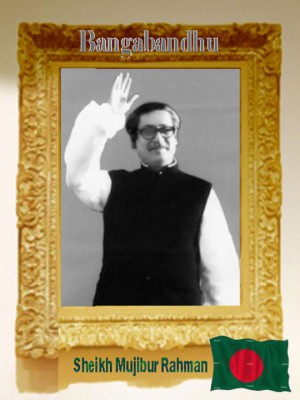
It is almost an open secret in the country. Government also knows these facts, but is unable to take any action. In recent days, names of some of the members of the BNP’s cabinet in Bangladesh come as the worst corrupts. They minted money like wild gambling. Sixty members of parliament rose complaint against a particular minister, while the Prime Minister Khaleda Zia did not take any action against him. It is also learnt that, many of the family members of Prime Minister Begum Khaleda Zia are becoming fabulously rich, by using state power. The most talked about corrupt figure in Bangladesh is Tareq Rahman, eldest son of the Prime Minister. TAREQ BECAME BILLIONAIRE JUST IN FEW YEARS, WHILE MANY OF HIS FRIENDS, WHO WERE PARTNERS IN HOMOSEXUAL ACTIVITIES OR IN THE ADDICTION OF PHENSIDYL ALSO BECAME VERY RICH UNDER THE DIRECT PATRONIZATION OF THE SON OF PM BEGUM KHALEDA ZIA. Tareq has established Hawa Bhaban, which is although considered as one of the offices of the ruling party. There are solid evidences of this office’s involvement in interfering in almost all the business and contracts in the country.
Hawa Bhaban palls are considered as the most influential figures in Bangladesh. One of the Hawa Bhaban palls is Giasuddin Mamun, who is tareq’s closest friend too. Hailing from an extreme poor family in the southern part of Bangladesh, Mamun is today one of the richest men in Bangladesh through various corruption, smuggling and many other forms of illegal activities. Surprisingly one of the assistant press secretaries of Prime Minister Khaleda Zia, Touhidul Islam alias Ashik Islam is simultaneously working in the PMO as well in Hawa Bhaban as its spokesman. Moreover, this man is also involved with Tareq’s private television channel, Channel One. There are numerous allegations on Ashik’s involvement in a number of financial irregularities as well of misappropriating state money with various excuses, government did not take any action against this man, as he is considered to be one of the closest aides of Tareq Rahman. In the PMO too, Ashik is known as an womanizer, alcoholic, bribe taker and blackmailer.
Prime Minister Khaleda Zia was notified several times about this man’s illegal activities by country’s intelligence agencies. But, she could not take any action against Ashik, as Tareq always stood behind him with fullest support. Khaleda’a own brother, Sayeed Iskander, who is a sacked major of Bangladesh army, also turned into multi-millionaire by using the influence of his sister. Positions why these criminals should not to be arrested? the criminals should be punished the corruption not to be repeated in bangladesh US, UK seek help to recover kickbacks : Tareq Koko and Mamun and babar nama by Mokthel Hossain Mukthi on Sunday, April 3, 2011 at 12:37pm US, UK seek help to recover kickbacks $200m stashed in overseas banks by Koko, ministers of 4-party government Staff Correspondent The US and UK yesterday sought Bangladesh's assistance in their bid to recover around $200 million allegedly paid in kickbacks to former prime minister Khaleda Zia's son Arafat Rahman Koko and some ministers of the last BNP-led government.
A delegation comprising the United States justice department's deputy chief Linda M Samuel, Federal Bureau of Investigation (FBI) agent Deborah Heprevotte and UK Institute of Management consultant Ferdous Ahmed made the request for help at a meeting with Law Minister Shafique Ahmed at his secretariat office. They handed him a list of the persons suspected of receiving the sums during the immediate past four-party alliance rule. Shafique last night told The Daily Star, “We have assured the delegation of help in getting back the money." Earlier, after meeting the US and UK officials, he told reporters that the former prime minister's [Khaleda Zia] son Arafat Rahman Koko and a dozen ministers and leaders of four-party are alleged to have received $200 million in bribe for awarding work to foreign companies. The money is currently deposited in banks across 20 countries including Singapore, United Kingdom and United Arab Emirates, he added. He said law and finance ministries, Attorney General's Office and Bangladesh Bank will have to work together to assist in retrieval of the alleged bribery proceeds. Attorney General Salah Uddin Ahmad and ACC counsel Anisul Huq were present at the meeting.
The delegation has been in the city for over a week. They have had several meetings with local officials concerned. Contacted, a spokesman of the US embassy in Dhaka said their justice department officials are here to follow up the money recovery case and also widen the scope of US-Bangladesh judicial cooperation. The US government on Thursday filed a forfeiture action against accounts holding the alleged bribes paid to Koko and others. On December 18 last year, the Anti-Corruption Commission (ACC) disclosed that Koko has around Tk 11.43 crore stashed in a Singapore bank Koko's parole cancelled Asked to return home by Aug 31 Unb, Dhaka Arafat Rahman Koko who had been on parole for treatment in Bangkok was asked to return home by August 31 and surrender before the court, official sources said yesterday. Koko, the youngest son of BNP Chairperson and ex-premier Khaleda Zia, is facing a number of corruption cases.
He was arrested during the previous caretaker government. Later, he got parole and left for Bangkok on July 19, 2008 for better treatment as he had been suffering from respiratory problems. His lawyer barrister Mahbubu Uddin Khokon MP told UNB yesterday night that they received a letter from the Home Ministry at about 7:00pm asking Koko to return by August 31 and surrender before court. Responding to the Home Ministry's letter Khokon said his client Koko's physical condition is so bad that interruption to his treatment only lead to his death. He said hospitals in Bangkok where Koko has been receiving treatment have been sending reports to the Bangladesh government every month stating his health condition. Last week, Bangladesh mission officials at Bangkok visited Koko to enquire about his health condition. “His health condition is very bad. If necessary the government can form an inquiry team to assess his health,” Khokon said. In reply to a question, he said a formal request will be made to the government soon to cancel the government's decision for bringing him back. Khaleda's Press Secretary Maruf Kamal Khan told the agency an ailing person has constitutional right to live. He said the present Prime Minister who was also on parole for her treatment cannot cancel Koko's parole. “There shouldn't be double standards of law.
This is politically motivated,” Maruf said Front Page what of the character of the mother, Khaleda Zia, who looked the other way while her sons were robbing the country blind, what about her responsibility to the electorate that made her prime minister? And why should we give Tariq Rahman special treatment because his mother brought him up as a spoilt brat? If the army’s hierarchy has any false sense of loyalty they should collectively take a walk every morning among the poor, hungry, shelterless of Bangladesh and look at the sheer helplessness in their desolate eyes. If they do not discover to whom their loyalty must be given, they are either blind or not true to the oath of allegiance they took. If the military hierarchy makes a political deal with the corrupt, whoever they may be, there is no hope for Bangladesh. If someone robs a house you put him in jail for a few years, white-collar criminals who take advantage of their office and/or connections must go to jail many more years.Bangladesh is at a peculiar crossroads in its nationhood, whether to carry out effective accountability before returning to full democracy or let public pressure hasten the renewal of political activity and allow the corrupt to further corrupt an already corrupted system. It would mean disaster; it will affect the survival of tens of millions. Given the temptations inherent and the exhortations of the motivated, the army’s hierarchy has done well in staying within the constitution and instead of acquiring direct power supporting civilian authority. The Bangladesh Army chief, Lieutenant-General Moeen Ahmad, has stayed true to his word in not getting carried away by the opportunity to ride into town publicly as the country’s saviour.
He must remain careful in not saying or writing anything that may give any inclination of political ambition in the future. Vested interest will not spare any opportunity to misconstrue good intention and undercut the credibility of the army’s intention and role behind the scenes because that will erode its effectiveness. It is of the utmost importance that the army’s reputation (and his) is not tainted by hint of personal ambition, except solely and wholly the well-being and future prosperity of Bangladesh. Tariq Rahman’s case makes for a crossroads for accountability; if Ziaur Rahman’s sons are shown any leniency then the whole process of accountability will be compromised. The military hierarchy will then have no business holding anyone in Bangladesh accountable. Tariq Rahman and Arafat Rahman are acid tests for the Bangladesh Army. Fail to make them accountable and you have failed your uniform and your country. ….. More Confession Babar cut $10m Warid deal for Koko Staff Correspondent Former state minister for home Lutfozzaman Babar spilled more beans as he told investigators yesterday that he had negotiated a $10 million fast-track frequency allocation deal for Warid Telecom and the booty was shared by Arafat Rahman Koko and former BNP MP Ali Asgar Lobi. Of the amount, $9 million was given to former prime minister Khaleda Zia's younger son Koko and $1 million to detained BNP leader Lobi who had close links with detained BNP Senior Joint Secretary General Tarique Rahman and his Hawa Bhaban. Babar also revealed during interrogation that Koko and former finance minister Saifur Rahman's son Tony took commission from a Chinese company in the name of giving it a contract for supplying telecommunications equipment. He, however, denied his involvement in the deal. On the controversial purchase of 1,970 vehicles involving Tk 121 crore from the government coffer and a huge counterpart fund from a donor agency, he told the investigators that he did not go through the documents before signing the deal. "It was my mistake.
I even did not go through the file before signing it," Babar was quoted to have said during interrogation. The former state minister claimed that he had no option but to approve the controversial vehicle purchase for various law enforcement departments "under pressure from the high-ups". Pacific Motors owned by former foreign minister M Morshed Khan was the prime beneficiary of the purchase proposal. Babar, who is now on a four-day police remand, said BNP's Senior Joint Secretary General Tarique Rahman was the main backer of Pacific Motors. The government decided to procure the 1,970 cars ahead of the Saarc summit in the capital in 2005. The police headquarters floated a tender in which 16 importers participated. But at the last moment, the authorities changed the conditions of bidding through a circular in such a way that allowed only two importers to participate. That prompted the other bidders to lodge complaints with the government alleging corruption in the bidding process, but that did not work.
Sources said the former state minister also confessed that an official of the Bangladesh High Commission in Singapore used to look after his business there. Sources said the former state minister gave the investigators information, which they later found to be false. Babar gave the false information to save himself, the sources added. Babar also confessed to owning a lot of plots and flats in the names of his relatives. Meanwhile, Tk 20 crore, which Babar took as bribe from Bashundhara Group, was deposited in the central bank's government exchequer on Wednesday in nine cheques and pay orders. A Bashundhara Group director told the joint forces that Babar took the money in exchange for not implicating Bashundhara Group owner Ahmed Akbar Sobhan's son Shafiat Sobhan in the killing of another director of the conglomerate Humayun Kabir Sabbir. The former state minister asked the Bashundhara men to deliver the money to Prime Bank Director Qazi Saleemul Huq who was supposed to return the money to Babar at a later time, sources said. After receiving the bribe, Babar allegedly instructed the police not to proceed with the case and the Bashundhara director's murder still remains unsolved. He also allegedly let Sobhan's son Shafiat fly out of the country. Bashundhara Chairman Ahmed Akbar Sobhan is on the Anti-Corruption Commission list of graft suspects. He escaped to London soon after the anti-graft drive began and has been hiding abroad since then. http://bdcorruption.wordpr
Bangladesh imposed a travel ban on Monday on 40 people, mostly leaders of the opposition Jamaat-e-Islami party, over alleged war crimes during the country's war of independence four decades ago.

The party has denied charges that it collaborated with the Pakistani army during the 1971 war, and has accused the government of Prime Minister Sheikh Hasina of concocting war crimes charges to try to undermine it.
Jamaat is the main ally of the opposition Bangladesh Nationalist Party of former Prime Minister Begum Khaleda Zia, and the country's largest Islamic political party.
Those banned from leaving the country included Jamaat chief Motiur Rahman Nizami, his deputy Ali Ahsan Mohammad Mujahid, and another key leader, Delwar Hossain Saidee, who were arrested last month on charges ranging from obstructing police to sedition.
Immigration officials at Dhaka's Hazrat Shah Jalal international airport said they had received a list of 40 people with photographs, along with instructions from the government not to allow them to leave the country.
Police said the same list was also posted at other international airports, seaports and border transit points.
The government plans to begin war crimes trials soon, and police said some suspects including former Jamaat chief Golam Azam, had been preparing to flee the country.
Bangladesh, formerly East Pakistan, won independence with India's help in December 1971 following a nine-month war against Pakistan. Around 3 million people were killed and thousands of women raped.
Authorities also filed charges on Monday against more than 800 paramilitary troops accused of involvement in a mutiny last year. The charges include murder, torture and concealing the corpses of those killed, an investigating officer said.
The mutineers killed 74 people including 57 army officers commanding the paramilitary Bangladesh Rifles in a dispute over wages and the command structure.
The mutiny occurred less than two months after Hasina returned to power in January 2009 after polls that ended two years of rule by an army-backed interim authority. One of her election pledges was putting war criminals on trial.
The mutiny threatened to undermine Hasina's government and some thought it might lead the military to try to take back power. But the authorities ended the rebellion within two days through negotiations. More than 2,300 paramilitary soldiers were detained in Dhaka, of whom 801 were charged on Monday. WAR CRIMES TRIAL 12
Progress in Azam enquiry: investigator
Major war crimes suspect Ghulam Azam will be arrested as per the law as evidence of war crimes against him are being found, an investigator has said.
"The investigation into war crimes allegations against Ghulam Azam is making progress and he'll be arrested as per the law," Mohammad Abdul Hannan Khan, head of the International Crimes Tribunal's investigation agency, told reporters after a meeting on Saturday.
The meeting was held with a citizens' platform, 'International Crimes Tribunal Dhaka Sahayak Mancha' at the agency's Bailey Road headquarters.
Demanding arrest of octogenarian Jamaat leader Ghulam Azam, convenor of the platform, Shahriar Kabir said, "A few days back, a 97-year old Nazi man has been produced before court on charges of committing war crimes during the Second World War. So, age cannot be an issue in this regard."
"If Azam is not arrested, the entire trial process will become a farce," he said.
The amount of evidence of war crimes against Azam has so far been more than any other suspects, Kabir added. Issues of Jamaat's national daily, 'Dainik Sangram', that started publication in 1971 itself carries enough evidence of that, he said.
Several organisations have long been demanding the arrest of Ghulam Azam, former head of the religion-based political party Jamaat-e-Islami, a party that had opposed the Liberation War of Bangladesh during 1971.
Hannan Khan, head of the investigation agency, said they need an IT lab, a library, a separate secretariat and more manpower.
Chief war crimes prosecutor Golam Arif Tipu, who also attended the meeting, told the journalists, "We need more [logistics] support and manpower for speedy investigation. We'll, however, go ahead with our work even if we do not get that, but in that case the enquiry will need more time."
Kabir demanded rising the number of members of both the investigation agency and the prosecution team to 25. Currently, the investigation agency has 16 members, while the prosecution team has only eight.
Referring to the Nuremburg Triabunal, which had 51 prosecutors to hold the trial of 21, Kabir suggested the tribunal office be shifted from the Old High Court building for security reasons.
Kabir dismissed the government claim that it has no international pressure for not holding the trials. He said, "There ploys being sketching out abroad. Questions are being raised. We have good answers to them, but the government is not tackling that with good efforts."
Kabir also demanded trial of organisations like Jamaat-e-Islami, Nezam-e Islami, Razakars, Al-Badr and Al-Shams, which had opposed the Liberation War.
Attorney General Mahbubey Alam, 'Ghatak Dalal Nirmul Committee' president and member of the platform justice Golam Rabbani & Professor Muntasir Mamun was, among others, present at the meeting.
Azam is currently staying at his Moghbazar residence in the city.
The probe agency launched an investigation into the allegations of war crimes against Ghulam Azam on Aug 23. A three-member panel had visited Brahmanbaria's 'old' and 'new' prisons facilities, the mass grave beside Kurulia Bridge and the Pairtala killing ground, and recorded the statements of a number of witnesses.
Five other Jamaat leaders -- its chief Matiur Rahman Nizami, secretary general Ali Ahsan Mohammad Mojaheed, executive council member Delwar Hossain Sayedee, assistant secretaries general Muhammad Kamaruzzaman and Abdul Quader Molla --and senior BNP leader Salahuddin Quader Chowdhury are currently facing trial in a war crimes tribunal.
Azam, leading a secluded life since quitting the top office of Jamaat, in an exclusive interview with the bdnews24.com on July 6 last year said the government had impounded his passport on April 27 that year.
On March 25, the Awami League-led government set up the war crimes tribunal, a prosecutors' panel and the investigation agency, paving the way for holding the long-awaited trial of war criminals.
WAR CRIMES TRIAL 12
Progress in Azam enquiry: investigator
Major war crimes suspect Ghulam Azam will be arrested as per the law as evidence of war crimes against him are being found, an investigator has said.
"The investigation into war crimes allegations against Ghulam Azam is making progress and he'll be arrested as per the law," Mohammad Abdul Hannan Khan, head of the International Crimes Tribunal's investigation agency, told reporters after a meeting on Saturday.
The meeting was held with a citizens' platform, 'International Crimes Tribunal Dhaka Sahayak Mancha' at the agency's Bailey Road headquarters.
Demanding arrest of octogenarian Jamaat leader Ghulam Azam, convenor of the platform, Shahriar Kabir said, "A few days back, a 97-year old Nazi man has been produced before court on charges of committing war crimes during the Second World War. So, age cannot be an issue in this regard."
"If Azam is not arrested, the entire trial process will become a farce," he said.
The amount of evidence of war crimes against Azam has so far been more than any other suspects, Kabir added. Issues of Jamaat's national daily, 'Dainik Sangram', that started publication in 1971 itself carries enough evidence of that, he said.
Several organisations have long been demanding the arrest of Ghulam Azam, former head of the religion-based political party Jamaat-e-Islami, a party that had opposed the Liberation War of Bangladesh during 1971.
Hannan Khan, head of the investigation agency, said they need an IT lab, a library, a separate secretariat and more manpower.
Chief war crimes prosecutor Golam Arif Tipu, who also attended the meeting, told the journalists, "We need more [logistics] support and manpower for speedy investigation. We'll, however, go ahead with our work even if we do not get that, but in that case the enquiry will need more time."
Kabir demanded rising the number of members of both the investigation agency and the prosecution team to 25. Currently, the investigation agency has 16 members, while the prosecution team has only eight.
Referring to the Nuremburg Triabunal, which had 51 prosecutors to hold the trial of 21, Kabir suggested the tribunal office be shifted from the Old High Court building for security reasons.
Kabir dismissed the government claim that it has no international pressure for not holding the trials. He said, "There ploys being sketching out abroad. Questions are being raised. We have good answers to them, but the government is not tackling that with good efforts."
Kabir also demanded trial of organisations like Jamaat-e-Islami, Nezam-e Islami, Razakars, Al-Badr and Al-Shams, which had opposed the Liberation War.
Attorney General Mahbubey Alam, 'Ghatak Dalal Nirmul Committee' president and member of the platform justice Golam Rabbani & Professor Muntasir Mamun was, among others, present at the meeting.
Azam is currently staying at his Moghbazar residence in the city.
The probe agency launched an investigation into the allegations of war crimes against Ghulam Azam on Aug 23. A three-member panel had visited Brahmanbaria's 'old' and 'new' prisons facilities, the mass grave beside Kurulia Bridge and the Pairtala killing ground, and recorded the statements of a number of witnesses.
Five other Jamaat leaders -- its chief Matiur Rahman Nizami, secretary general Ali Ahsan Mohammad Mojaheed, executive council member Delwar Hossain Sayedee, assistant secretaries general Muhammad Kamaruzzaman and Abdul Quader Molla --and senior BNP leader Salahuddin Quader Chowdhury are currently facing trial in a war crimes tribunal.
Azam, leading a secluded life since quitting the top office of Jamaat, in an exclusive interview with the bdnews24.com on July 6 last year said the government had impounded his passport on April 27 that year.
On March 25, the Awami League-led government set up the war crimes tribunal, a prosecutors' panel and the investigation agency, paving the way for holding the long-awaited trial of war criminals.


In the year of 1953 I came to this beautiful world while violent storm was shivering mother earth. In the month of April on the 13th which happened to be a Tuesday, I cried for the first time on my mothers’ lap and all my relatives rejoiced. It was an occasion of double happiness because my birth brought the long happy New Year along with it.This is Mukthi, Mukthishena71, somebody called me Mokter, some one mothul, but in 1971 I have changed my name when I have joined the Liberation war as a freedom fighter. The freedom fighter of Bangladesh liberation war called Mukthi bahini / Mukthifouze / Mukthishena, just I have found the new name so no one can call me others name which is not perfect and didn’t like. I became Mukthi, Moktel Hossain Mukthi. I’m from South Akal Barish Village, Banshgadi Union under Kalkini UpaZila of Madaripur district.